
Three data: the public deficit for this year is expected to be 5.3%; the Public Debt will reach 116.4% of the GDP; the average annual inflation will be around 7.5%. Translated to a domestic scale, these data would be equivalent to saying that, this year, a typical family will spend 5.3% more than it earns.
As a result, it is going to have to borrow to survive for an amount equivalent to 116.4% of its annual income, with increasingly higher interest rates; moreover, while maintaining the same income, its expenses are going to increase by 7.5%.
Some technical nuances could be made to this comparison, but in general terms this is the situation.
In these projections there is, however, a basic error: considering only the strictly economic aspects, without realizing that the economy is a radically anthropological question, a human action (Mises, "The economy is an anthropological question, human action"). dixit), which is not exhausted or resolved in proposals for public spending, tax increases or aid and subsidies, but in the identification of the human person and respect for his or her unique dignity. Every economic decision has moral consequences.
The left proclaims the need for more social justice, which is concretized in the increase of the welfare state, guaranteed by the public authorities. The other side advocates personal freedom and responsibility in economic activity and market freedom as a means of ensuring the distribution of resources.
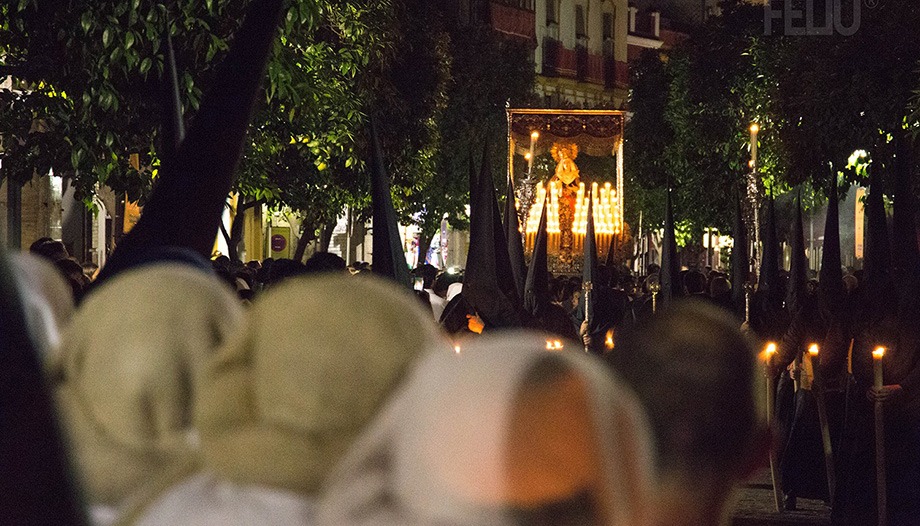
Here the sisterhoods have something to say and do in their dual mission as agents of Charity and regenerators of society from within.
The brotherhoods do not pretend to give a technical solution to economic problems; their criteria are contained in the Social Doctrine of the Church, which is not a "third way" between capitalism and socialism, because it does not attend to the "logic of operations", but to the "logic of gift", to the free acceptance of God's love, which is what determines the quality of human action that activates operations.
"It is a matter of promoting justice, not of giving handouts," say some, thus creating a false dialectic pair between justice and charity, which they identify as a concession of capitalism to soothe their conscience. These apostles of the welfare state forget that justice is inseparable from charity, intrinsic to it; it presupposes justice and perfects it.
Justice is the first way of charity: I cannot give to others what is mine without first having given them what is rightfully theirs; but justice alone does not provide human beings with all that is rightfully theirs; they also need God, which implies donation.
The displacement of charity by the attention of the State leaves people's most fundamental moral and spiritual needs unsatisfied and perpetuates material poverty (Benedict XVI).
The ever-expanding welfare state makes the exercise of charity more difficult and relegates the Church, and also the brotherhoods, to the status of philanthropic entities subsidiary to the State.
Charity is not giving, it is "suffering with", that is why the brotherhoods do not give alms, they distribute justice, more love; in them Christian charity is intrinsic to their nature, not an optional extra.
Charity is not only about solving immediate material needs, it is also about attending to the personal dignity of each of those assisted. The left does not understand the individual approach, person to person, it tends to social engineering, but it fails to address each individual person, that is why the welfare state fails at this point.
One last important detail to keep in mind: in this battle to attend to the needs of others, the brotherhoods do not generate resources, nor do they issue "cofrade debt" to attend to their charitable works.
They obtain resources from society, not by the coercive means of taxation, but by appealing to the charity and solidarity of all. They are the "social agents" of charity.
In addition to meeting people's needs, the fraternities thus rebuild the moral foundations of the economy, uniting justice and charity. No more, no less, should be asked of these institutions that have in their hands, to a large extent, the reconstruction of our social values.