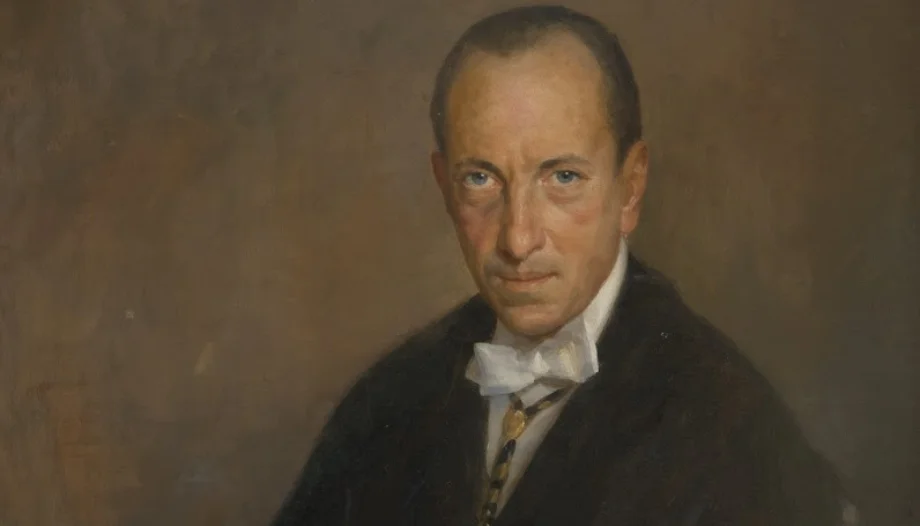
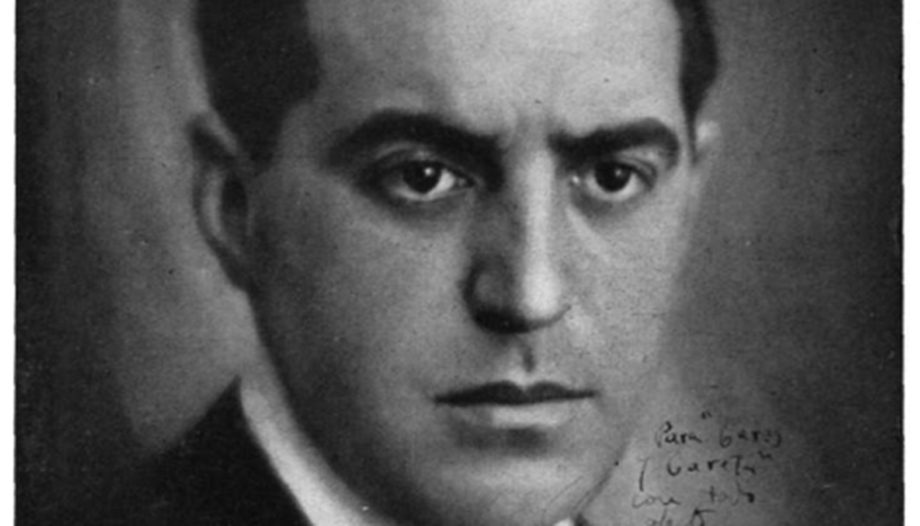
Gregorio Marañón y Posadillo (May 19, 1887 - March 27, 1960), was a Spanish internist, scientist, historian, writer and thinker, founder of Endocrinology in Spain.
His work includes more than 2000 articles, more than 500 scientific monographs, and about 40 books. He wrote the first treatise on internal medicine in Spain and his book Manual of etiological diagnosis (1946) was one of the most widely distributed medical books in the world. Although he was an active physician in his practice, he was also the physician of the Royal Household and of numerous personalities of the political, literary and social life of the time. But above all, he was the "doctor of charity" -or doctor of care for the poor- of the Provincial Hospital of Madridtoday Gregorio Marañón General University HospitalIn 1911, he was assigned to the infectious diseases service at his request. As a historian, he is considered a first-rate biographer, while his works reflect his status as a Catholic.

Among the works that reflect his Catholicism, we can name the text of "Saint Martin good and bad", and also writings about Saint Ignatius, Fray Luis, Cervantes, Isabel the Catholic, and Saint Teresa in Paris. Although his most outstanding works are about Benito Jerónimo Feijoo y Montenegro (1676-1764), a Benedictine religious, essayist and Spanish polygrapher; and Martín Sarmiento or Padre Sarmiento, (1695-1772), a Spanish Benedictine writer and scholar belonging to the Enlightenment. His writings abound with a deep religiosity within a biographical framework. An austere, humanist and liberal man, he is considered one of the most brilliant Spanish intellectuals of the 20th century. He was a member of five of the eight royal academies and was president of the Ateneo Madrileño.
On the other hand, the author's position on personal interiorization stands out, where he demonstrates his conceptual differentiation between religion and the institution of the sacred, while maintaining his adherence to and defense of the authenticity of evangelical values. In fact, among his constant references, God and his personification in Jesus appear as a model of values.