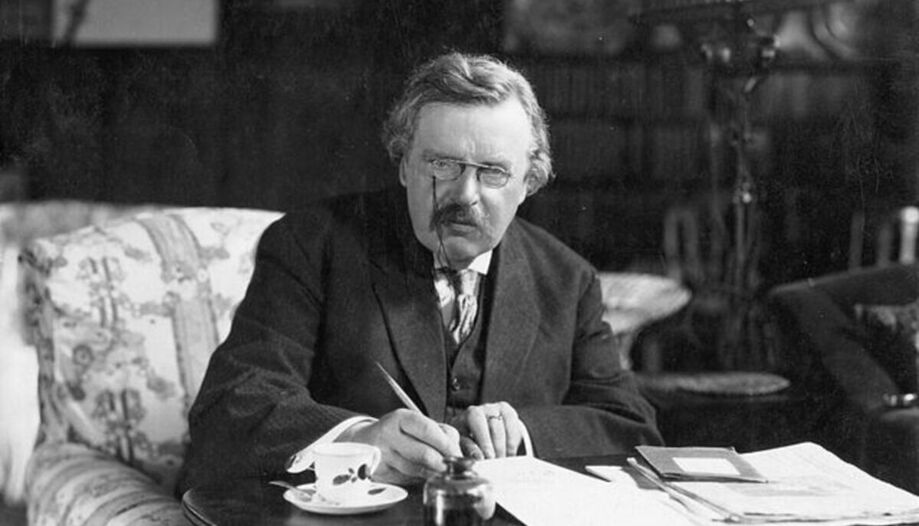
From 1905 until 1936, the year of his death, the famous English writer G. K. Chesterton (London, 1874-Beaconsfield, 1936) wrote regularly in the London weekly "The Illustrated London News", founded in 1842 by Herbert Ingram and Mark Lemon and disappeared in 2003.
Ediciones Encuentro has proposed to publish in Spanish all the articles that Chesterton published in this magazine. Currently, the series is composed of six volumes, the first five of which are "The end of an era"(articles from 1905-1906), "Vegetarians, imperialists and other pests" (1907), "The press is wrong and other truisms" (1908), "The threat of hairdressers" (1909) y "Many vices and some virtues" (1910).
The most recent volume, published in February of this year in collaboration with the Chesterton Club of the San Pablo CEU University (Angel Herrera Oria Cultural Foundation), under the title "The Chesterton Club", was published by the Chesterton Foundation in collaboration with the Chesterton Club of the San Pablo CEU University (Angel Herrera Oria Cultural Foundation).Things men rightly hate"The book, published in our language in the same year that marks the 150th anniversary of the birth of the writer, born in London in 1874, contains articles published during the year 1911. These publications, therefore, predate Chesterton's entry into the Catholic Church, which took place in 1911. in the year 1922.
The man who has been called "the apostle of common sense" covers a wide range of topics, from Christmas, literature or war, to family, marriage, religion or the press, among many others, displaying his peculiar wit and irony.
With Chesterton, any occasion can be the starting point to reflect on a subject, whether it is a circular from some people who "wanted to revive in England the religion of the pagan Saxons", to talk about the concepts of modernity or antiquity; women's fashion to comment that polygamy "what it really means is slavery"; or vegetarian food to exemplify how language can be twisted to avoid calling something by its name.
The contemporary reader will find that many of the ideas presented here may well serve our society today, despite the distance of more than a century that separates us from these articles.