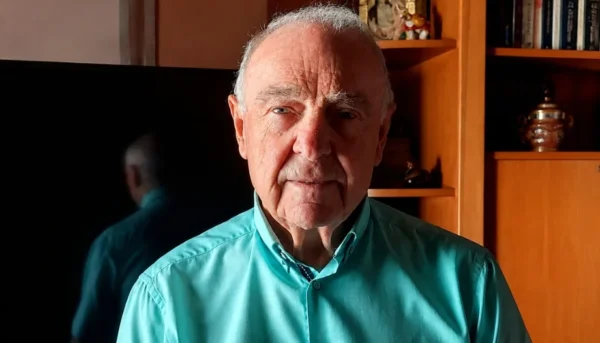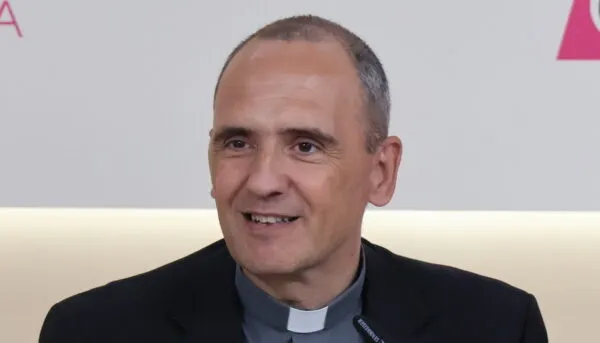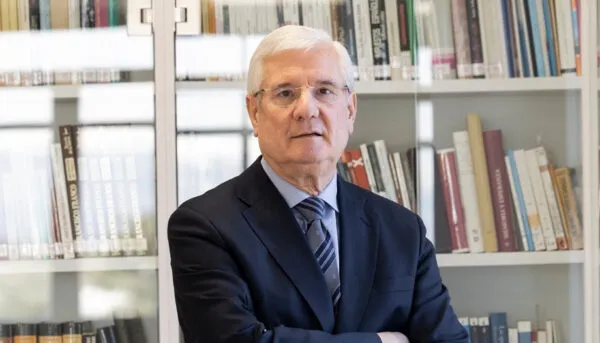

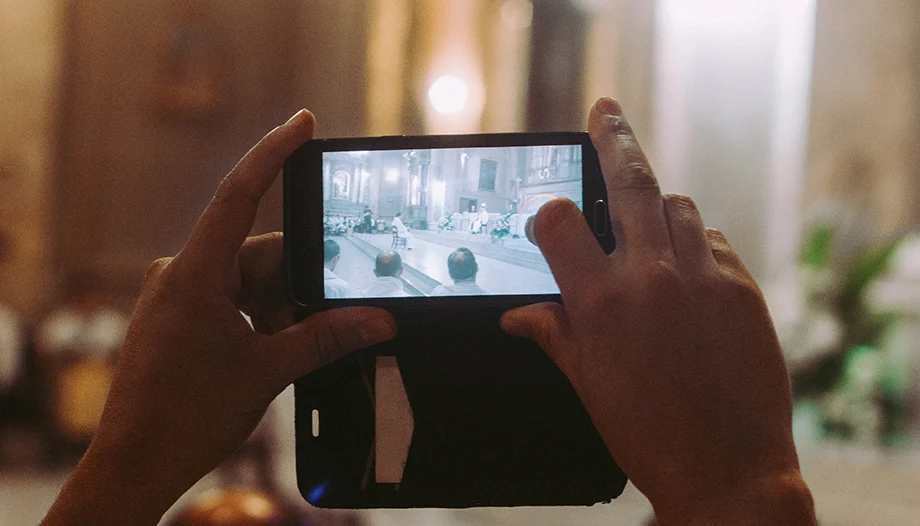
The president of the Episcopal Commission for Social Communications, Bishop José Manuel Lorca Planes, and the president of the Episcopal Commission for the Liturgy, Bishop José Leonardo Lemos, shared a briefing focused on the guidelines that both commissions have jointly developed to "help and advise" on the retransmission of the Eucharist and other liturgical or "paraliturgical" celebrations, both in the general media and through various social platforms.
The document recommends that special care be taken with these broadcasts to avoid confusing the faithful.
The president of the Episcopal Commission for the Liturgy wanted to point out that these are "guidelines for all those who bring the celebrations closer to those who cannot physically attend".
Bishop Lemos stressed that "we want people to take into account what is being offered: the Mystery of Redemption and to whom it is offered: to specific recipients, especially the sick, the elderly and caregivers".
At this point, the bishops once again recalled that following Mass through the media is not a substitute for attending Sunday Mass if one does not have a serious impediment.
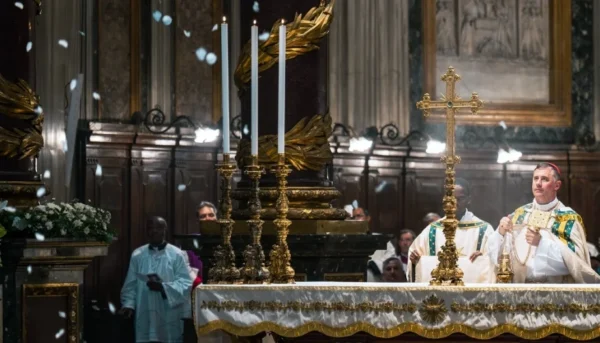
Among some of the guidelines included in this document, it is established, for example, that the celebrations should be held from a holy place: temple or chapel, and that the priest celebrant, the acolytes and the faithful people physically present, "should be aware that the celebration is being retransmitted".
Lemos called for "care to be taken in the development of the liturgy, the readings, etc., as well as in the realization and retransmission of the celebration. In this sense, the celebrant "must know that he is addressing both the present and the virtual community.
In addition, the document advises that, once the Eucharistic celebration has been broadcast, the video should be deleted "so as not to give rise to misunderstandings". The Eucharistic celebration is lived in spiritual communion with a real community that gathers at a certain time and place. "We do not 'save' the video of the Mass to watch it later," said Msgr. Lemos, although he pointed out that certain moments of the celebration of the Holy Mass, such as the homily, "can be recorded as spiritual nourishment for the faithful.
Another piece of advice is that priests who carry out this type of retransmissions should inform the Episcopal Media Delegation of their corresponding bishopric so that the bishop is aware and knows which priest is retransmitting this type of celebrations and how.
In the words of Bishop Lemos, "it is not a matter of controlling or restricting, but of helping, especially the priests who carry out this type of retransmission, so that they may be worthy and help both the people present physically and virtually".
The bishops responsible for both commissions emphasized that these guidelines will be published on the CEE website and sent to diocesan priests.