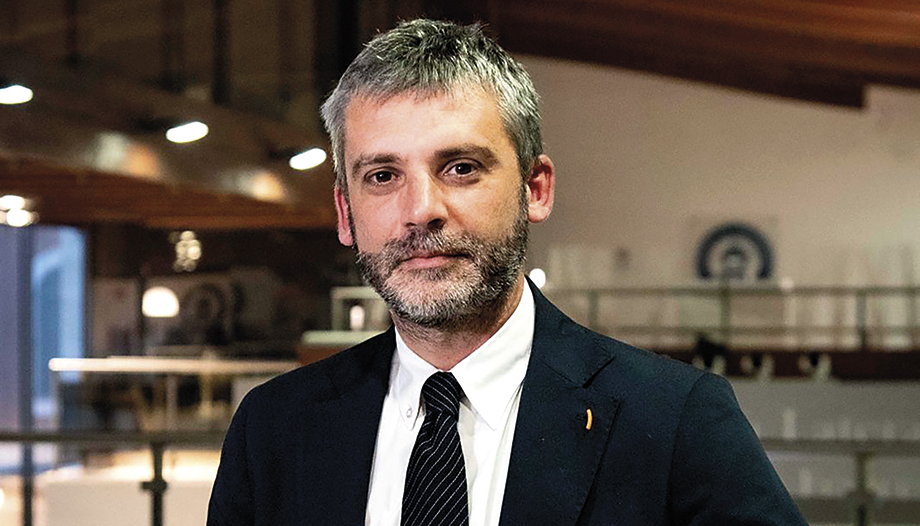
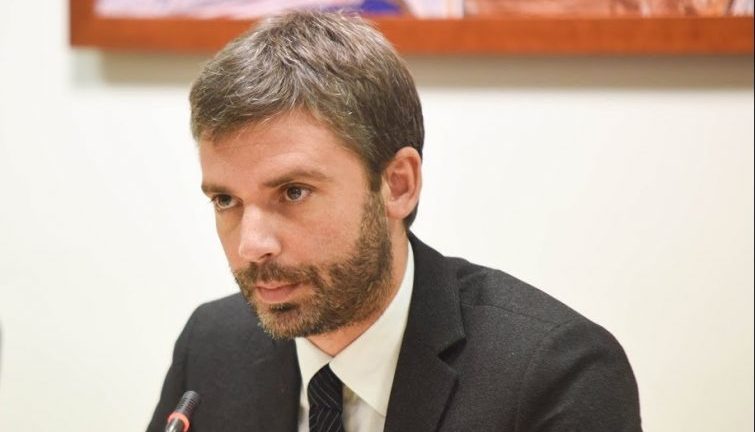
We have recently learned of the Message for World Communications Day, in which Pope Francis has once again called for the need for "to get out of ourselves" y "walking in search of truth". Omnes has interviewed for the occasion Professor Massimiliano Padulasociologist and professor of communication at the Pontifical Lateran University, as well as president of the Coordination of Associations for Communication linked to the Italian Episcopal Conference.
P- Professor, in your opinion, what is the central point of Pope Francis' Message prepared for this year's Communications Day?

R- The Pope develops a multifaceted reflection, integrating into an evangelical framework (the meeting between Jesus and the first disciples that is recounted in the Gospel of John 1:46), journalism, opportunities and pitfalls of digital culture, the human dimension of communication. But if I had to extrapolate from this kaleidoscope of proposals a central point, I would choose the ".culture of encounter". This Message has the merit of applying one of the main ideas of the Magisterium of Francis to the world of information, elaborating a renewed criterion of actuality: to approach people where they are and how they are.
P- The Pope seems to be addressing journalists in particular, but is this really the case?
R- Journalism, understood in its traditional dimension, no longer exists. The professional orders, the codes of ethics, the physical newsrooms, the defined roles, leave more and more room for a communication oriented by the logic of the web. In a sense, we are all journalists because we are producers and distributors of news, because we have an audience that follows us and because we can easily choose different transmission codes (a written article, a podcast, a video...).
For these reasons, the Pope appeals to all people of good will (and not only to journalists) to continue to communicate the fascination of the Christian adventure also in its actions".journalistic".
P- In the era of disintermediationDoes information still make sense in the classical sense?
R- The word "disintermediation"has acquired a negative connotation in recent years. This happens when whoever is in the media feels part of an elite, proposes himself as the exclusive holder of a service. I believe, on the other hand, that the disintermediation is nothing more than a new form of mediation.free of formalisms, of corporatist presumptions, of restricted clubs (the Pope speaks, in this regard, of "...").pre-packaged, palatial, self-referential information").
This is one of the reasons for the crisis in the journalistic sectorwho certainly does not have to take off his "middle" suit, but rather repositioning your work in other categories and needs. Among them: in-depth analysis, free opinion, denouncing inequalities and reporting on the most marginalized.
P- In your opinion, where do we need to go to offer quality content to the public?
R- I believe that even before the content, it is necessary and urgent to internalize what digital is. It is necessary to break the instrumental vision of the web and begin to grasp the human aspects, to understand times, spaces, codes and languages.. Once this is done, any content can work as long as it reflects one criterion: the truth..
The network, in fact, has the extraordinary function of unveiling evil by making our life transparent. Therefore, communicative quality today refers to communication with truth, justice, beauty and respect for people's dignity.especially those most in need.
P- Since a few weeks ago, Omnes also offers digital information: what added value can the web bring?
R- The added value may refer to the concept of ".glocalization"that is to say, to the multiplication and diversification of localized experiences in global territories. This is possible thanks to the increasing and better technological opportunities, but also to the new perspective, skills and sensibility of contemporary man.
I, however, prefer the adjective ".Catholic" a "glocal"not in its clerical sense, but in the sense of understood in its original sense of "universal".. Omneswith its landing on the web and its naming strategy, will only become even more Catholic.