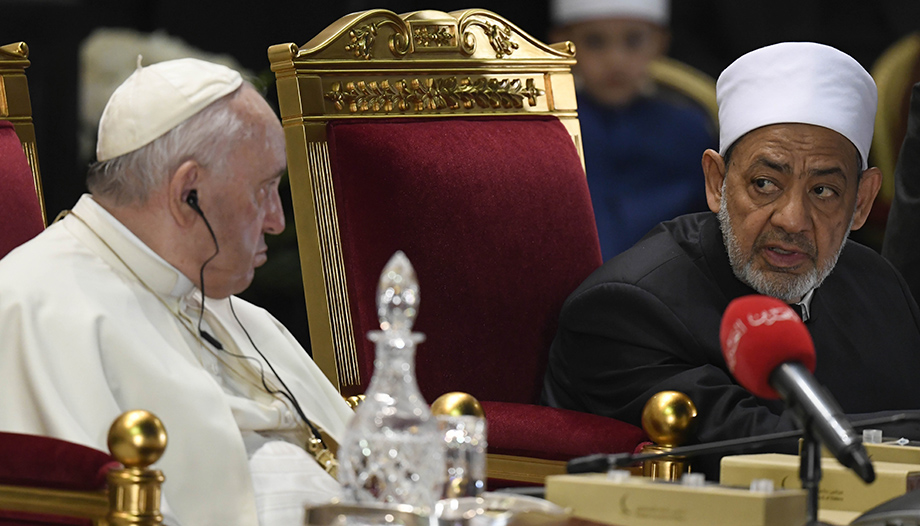
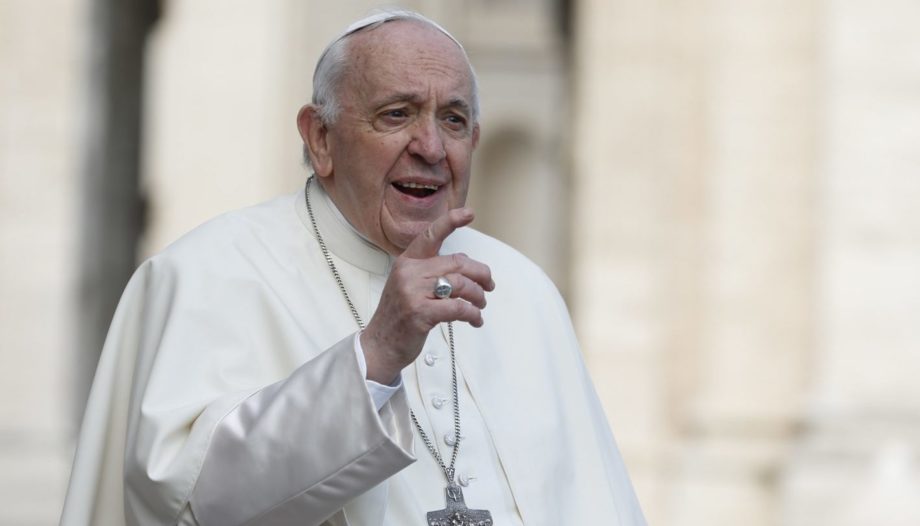
It is a sunny morning in Rome on Wednesday, April 27, when Pope Francis is expected to hold the general audience in St. Peter's Square, as he usually does every Wednesday. The Pontiff resumes his agenda after having been forced to suspend it yesterday due to knee pains.
He began his catechesis by referring to a female figure in the Bible: "Today we will let ourselves be inspired by the splendid book of Ruth, a jewel of the Bible. The parable of Ruth illuminates the beauty of family bonds: generated by the couple's relationship, but which go beyond the couple's bond. Bonds of love capable of being equally strong, in which radiates the perfection of that polyhedron of fundamental affections that form the family grammar of love. This grammar carries vital sap and generative wisdom in all the relationships that build the community. With respect to the Song of Songs, the book of Ruth is like the other side of the diptych of nuptial love. Equally important, equally essential, it celebrates the power and the poetry that must inhabit the bonds of generation, kinship, dedication, fidelity that envelop the whole family constellation. And which even become capable, at the dramatic junctures of a couple's life, of bringing an unimaginable force of love, capable of relaunching hope and the future".


"We know that the commonplaces about kinship bonds created by marriage, especially between mother-in-law and daughter-in-law, speak against this perspective. But precisely because of this, the word of God becomes valuable. The inspiration of faith knows how to open a horizon of witness against the most common prejudices, a valuable horizon for the whole human community. I invite you to rediscover the book of Ruth! Especially in the meditation on love and in the catechesis on the family".
"This little book also contains a valuable teaching on the alliance of the generations: where youth reveals itself capable of giving new enthusiasm to the mature age, old age discovers itself capable of reopening the future for the wounded youth. At first, the elderly Naomi, even moved by the affection of her daughters-in-law, who are widowed by their two sons, is pessimistic about their destiny in a village that is not theirs. So she warmly encourages the young women to return to their families to rebuild a life for themselves. He says, "I can do nothing for you." Already this is shown as an act of love: the old woman, without a husband and already childless, insists that the daughters-in-law leave her. But it is also a kind of resignation: there is no possible future for the foreign widows, deprived of their husband's protection. Ruth resists this generous offer. The bond that has been established has been blessed by God: Naomi cannot ask to be abandoned. At first, Naomi appears more resigned than happy about this offer: perhaps she thinks that this strange bond will aggravate the risk for both of them. In certain cases, the tendency of the elderly to pessimism needs to be counteracted by the affectionate pressure of the young".
"In fact, Naomi, moved by Ruth's devotion, comes out of her pessimism and even takes the initiative, opening for Ruth a new future. She instructs and encourages Ruth, her son's widow, to find a new husband in Israel. Boaz, the candidate, shows his nobility, defending Ruth from the men who work for him. Unfortunately, this is a risk that is also verified today".
"Ruth's remarriage is celebrated and the worlds are once again pacified. The women of Israel tell Naomi that Ruth, the foreigner, is worth "more than seven sons" and that this marriage will be a "blessing from the Lord". Naomi, in her old age, will know the joy of having a part in the generation of a new birth. Look how many "miracles" accompany the conversion of this old woman! She converts to the commitment of making herself available, with love, for the future of a generation wounded by loss and at risk of abandonment. The fronts of recomposition are the same ones that, on the basis of the probabilities traced by the prejudices of common sense, should generate insurmountable fractures. However, faith and love allow to overcome them: the mother-in-law overcomes jealousy for her own son, loving the new bond of Ruth; the women of Israel overcome distrust for the stranger (and if women do it, everyone will do it); the vulnerability of the woman alone, facing the power of the man, is reconciled with a bond full of love and respect".
Pope Francis concludes by assuring that "all because the young Ruth is determined to be faithful to a bond exposed to ethnic and religious prejudice. All because the elderly Naomi takes the initiative to reopen the future for Ruth, instead of merely enjoying her support. If the young people open themselves to gratitude for what they have received and the elders take the initiative to reopen their future, nothing can stop the blossoming of God's blessings among the people! God grant that we may be witnesses and mediators of this blessing!"