In the context of the congress held on May 21, 2024 at the Pontifical Urbaniana University and dedicated to the centenary of the first council of the Catholic Church in China one of the papers explored the preparatory phases of such an event by using the Historical Archive of Propaganda Fide preserved since 1600 by the Dicastery for Evangelization.
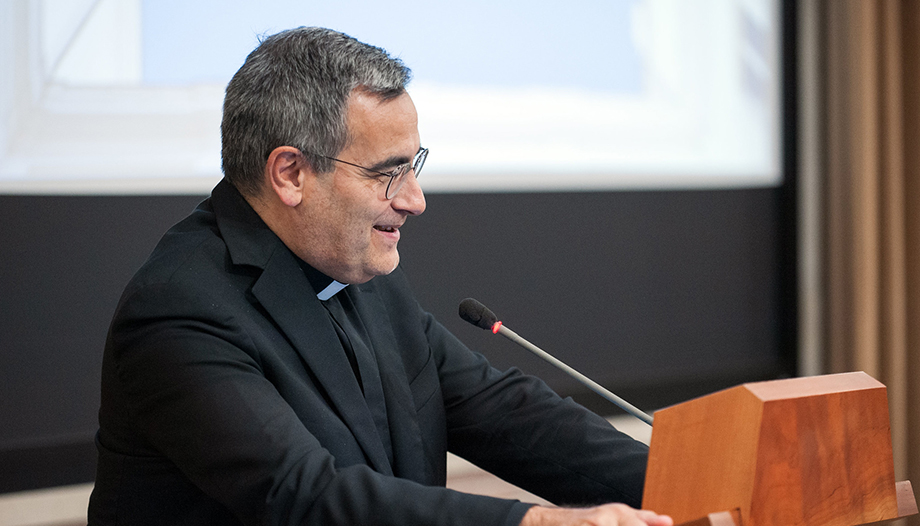
This conference was given by the priest and archivist Flavio Belluomini - in charge of the Archives - and offered a unique insight into the interaction between Catholic missionaries in China and the Holy See during the preparation and celebration of the first General Synod in the Asian country.

Preparations
According to the speaker, preparations for the Synod of Shanghai began with the arrival of Bishop Celso Costantini in Hong Kong on November 11, 1922. In his communication to Cardinal Van Rossum, Prefect of the Sacred Congregation of Propaganda Fide, Costantini stated: "I will send further news shortly. In the meantime I will study the appointment of the Commission for the drafting of the Synod and I will make the corresponding proposal to Your Eminence....".
Thus began a meticulous process of compiling the minutes of the conferences of the Ordinaries of the seven Chinese ecclesiastical regions, as requested by Propaganda in its own Instruction of December 3, 1920.
A dossier entitled "First Negotiations on the General Synod" documents this preliminary phase, showing how the general discussions were transformed into clear and precise canons, as the head of the Historical Archives of Propaganda Fide explained in his report. In practice, Costantini and his Commission of Consultors, composed of 23 members, including seven Chinese, worked intensively to draw up a synodal outline divided into five books, following the structure of the 1917 Code of Canon Law.
The Shanghai Synod celebration
The Synod officially began on May 15, 1924. The documentation in the Historical Archives contains details of the pre-assembly announcements, including the convocation and organizational arrangements, as well as a report on the participants: 46 bishops, three apostolic prefects and 37 bishops provicar.
Costantini reported that the Synod began in a climate of mistrust, due above all to the perception of Benedict XVI's "Maximum Illud" (dedicated to the work of missionaries throughout the world) as a reproach to the Chinese episcopate. To deal with these difficulties, Costantini allowed ample freedom of discussion and organized a typing service to quickly distribute all the proposed corrections.
Approval of Minutes
After the conclusion of the Synod, on June 14, 1924, Costantini wrote to the Prefect of Propaganda Fide: "The Synod, stripped of the parts that were placed 'ad abundantiam' in the outline, remained in structure and substance as it had been presented, managing to be much improved. It was discussed word for word." Four years of examination and approval of the acts followed, during which time numerous experts were consulted, especially to resolve the question of Chinese terms to designate the Catholic Church.
The final stage of approval culminated on June 4, 1928, when the plenary congregation approved the acts by decree on June 12. This long process of revision and approval demonstrated the importance of collaboration between the local missionaries and the Roman authorities.
Complementary studies
Belluomini's report, presented at the Pontifical Urbaniana University, highlights the importance of the documentation preserved in the Historical Archives of Propaganda Fide for understanding the dynamics between the Holy See and the Church in China in the first quarter of the 20th century.
The archivist concluded his intervention by suggesting that further studies could deepen the local and Roman contribution to the formation of the synodal acts, offering a more complete understanding of this historical event. It was a true moment of dialogue and collaboration, despite initial mistrust and the complex linguistic and cultural issues addressed.