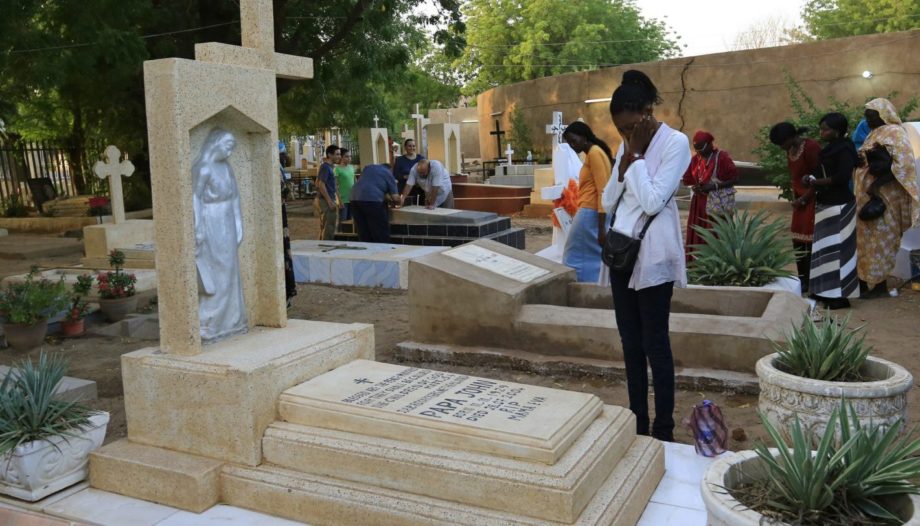
The Holy See, as happened last year because of the pandemic, has established by means of a decree issued by the Apostolic Penitentiary the extension to the whole month of November of the Plenary Indulgences for the faithful departed. As is known, the Church grants indulgences to those who, in the 8 days following the Solemnity of All Saints, visit cemeteries praying for the deceased, and on November 2, in particular, visit a church or oratory praying the Our Father and the Creed.
The Cardinal Major Penitentiary, Mauro Piacenza, commented in an interview that this is a "very heartfelt form of devotion, which is expressed by participating in Mass and visiting the cemeteries", and therefore, so that people can dilute their visits without creating a crowd, "it has been decided to dilute in time the possibility of using the indulgences, and so during the whole month of November it will be possible to acquire what is planned for the first 8 days of November".


"The Apostolic Penitentiary," reads the decree, "having heard the various requests recently received from various Sacred Pastors of the Church, because of the current state of the pandemic, confirms and extends for the entire month of November 2021 all the spiritual benefits already granted on October 22, 2020, by Decree Prot. N. 791/20/I with which, because of the Covid-19 pandemic, Plenary Indulgences for the faithful departed were extended for the entire month of November 2020."
The decree also affirms that "from the renewed generosity of the Church, the faithful will certainly draw pious intentions and spiritual vigor to direct their lives according to the evangelical law, in filial communion and devotion to the Supreme Pontiff, visible foundation and Pastor of the Catholic Church".
According to the Catechism of the Catholic Church, the indulgence is "the remission before God of the temporal punishment for sins, already forgiven, as far as guilt is concerned, which a faithful person willing and fulfilling certain conditions obtains through the mediation of the Church, which, as the administrator of redemption, distributes and applies with authority the treasure of the satisfactions of Christ and the saints.".
God forgives their sins to those who, after having committed a sin, repent through the sacrament of confession. However, there remains a "pending responsibility" for the consequences that the sin has had for the same person or for others, or even for society in general. This consequence is called "temporal punishment" and is a debt that persists and must be paid either in this life or in Purgatory.
It is then that the Church, the administrator of redemption, can grant indulgences that can fully or partially suppress (depending on whether it is a plenary or partial indulgence) this temporal punishment for sins committed and confessed up to that moment.