Translation of the article into English
The Holy See has made public the Apostolic Letter in the form of Motu proprio of Pope Francis. Ad charisma tuendum. This Motu proprio modifies some articles of the Apostolic Constitution Ut sit of November 28, 1982, with which St. John Paul II erected Opus Dei as a personal Prelature.
Founded in 1928 by the priest St. Josemaría Escrivá, Opus Dei is currently the only personal prelature in the Catholic Church, and recently, with the publication of the Apostolic Constitution Praedicate Evangelium on the Roman Curia, it came under the Dicastery for the Clergy and not under that of the Bishops, as it had been until now.
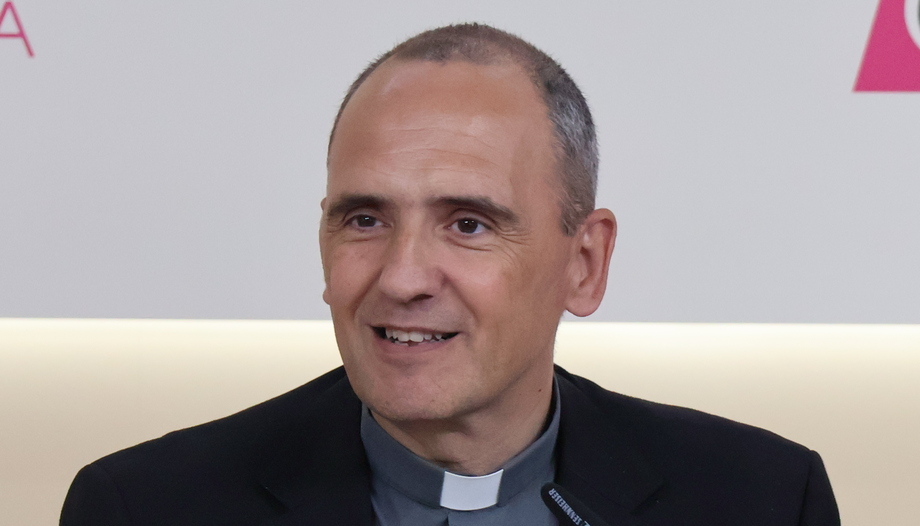
The Prelate of Opus Dei, Bishop Fernando Ocáriz, has published a brief note about this Motu Proprio in which he emphasizes that Opus Dei "filially accepts" the new ordinance.
Deepening the charism of the Work
In it, the Prelate of Opus Dei underlines the Pope's interest in caring for "the charism of Opus Dei," since he wishes, as John Paul II expressed earlier in the Constitution Ut Sit, "that it may always be a suitable and effective instrument of the salvific mission that the Church carries out for the life of the world.
For this reason, Bishop Ocáriz encourages the faithful of the Prelature to "deepen the spirit that the Lord instilled in our Founder and to share it with many people in the family, work and social environment," which consists in "spreading the call to holiness in the world, through the sanctification of work and family and social occupations."
The media of the Holy See, in presenting the document, have also underlined the objective of protecting the charism of Opus Dei and promoting the evangelizing work carried out by its members in the midst of the world. For its part, Opus Dei has published on its website theu website an explanation of the new document in the form of ten questions and answers..
Modifications to the Apostolic Constitution Ut sit
Specifically, the new Motu Proprio establishes, for example, the modification of the text of article 5 of the Apostolic Constitution Ut sit, which is now replaced by the following: "In accordance with art. 117 of the Apostolic Constitution Ut sit, the new Motu Proprio establishes, for example, the modification of the text of article 5 of the Apostolic Constitution Ut sit, which is now replaced by the following: "According to art. 117 of the Apostolic Constitution Praedicate EvangeliumThe Prelature depends on the Dicastery for the Clergy, which, depending on the subject matter, will evaluate the relative questions with the other Dicasteries of the Roman Curia. The Dicastery for the Clergy, in dealing with the various questions, will make use of the competencies of the other Dicasteries by means of the opportune consultation or transfer of dossiers." In this sense, "all matters pending in the Congregation for Bishops concerning the Prelature of Opus Dei will continue to be treated and decided by the Dicastery for the Clergy."
It also changes the frequency with which Opus Dei must, from now on, present a report on the situation of the Prelature and the development of its apostolic work, which will now be annual and not five-yearly, as determined by the Constitution Ut sit.
The Motu Proprio also states that, as a result of these modifications, "the Statutes proper to the Prelature of Opus Dei will be suitably adapted at the proposal of the Prelature itself, to be approved by the competent bodies of the Apostolic See.
The prelate will not become a bishop
As for the figure of the Prelate of Opus Dei, Ad charisma tuendum establishes that the prelate will not receive the episcopal order.
This decision "aims to reinforce the conviction that, for the protection of the particular gift of the Spirit, a form of government based more on charism than on hierarchical authority is necessary".
The Prelate of Opus Dei is granted, on the other hand, by reason of his office, the use of the title of Supernumerary Apostolic Prothonotary with the title of Reverend Monsignor and, therefore, may use the insignia corresponding to this title.
In this regard, Bishop Fernando Ocáriz wanted to recall that "the episcopal ordination of the prelate was not and is not necessary for the guidance of Opus Dei. In fact, St. Josemaría Escrivá, the founder of Opus Dei, was not a bishop, and his first successor, Blessed Álvaro del Portillo, was ordained a bishop in 1991, three years before his death. Later, Prelate Bishop Javier Echevarría was ordained in 1995, shortly after assuming the government of the Work.
Along these lines, Bishop Ocáriz encouraged the rekindling of the family spirit proper to Opus Dei, pointing out that "the Pope's desire to emphasize the charismatic dimension of the Work now invites us to strengthen the family atmosphere of affection and trust: the prelate must be a guide, but, above all, a father.