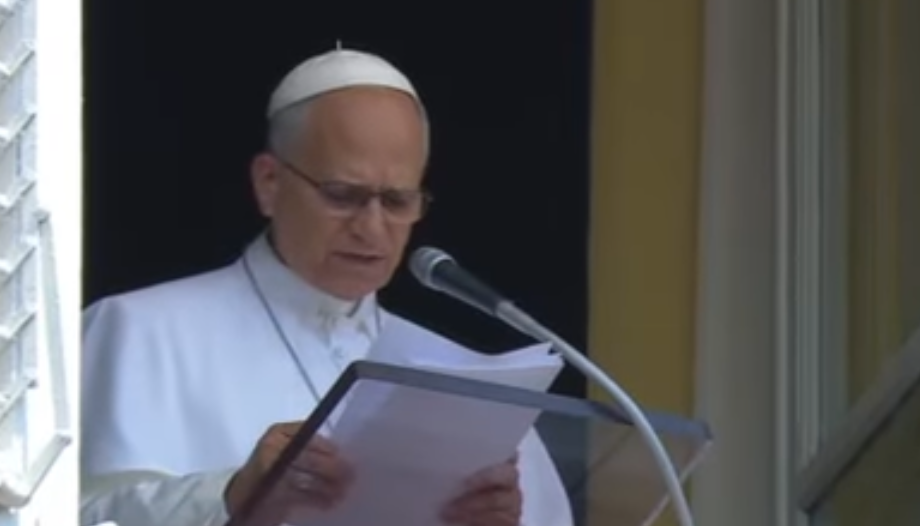
This morning, the Holy Father decreed that St. Hildegard of Bingen, together with St. Gregory of Narek and St. John of Avila, be inscribed in the General Roman Calendar as a memorial ad libitum.
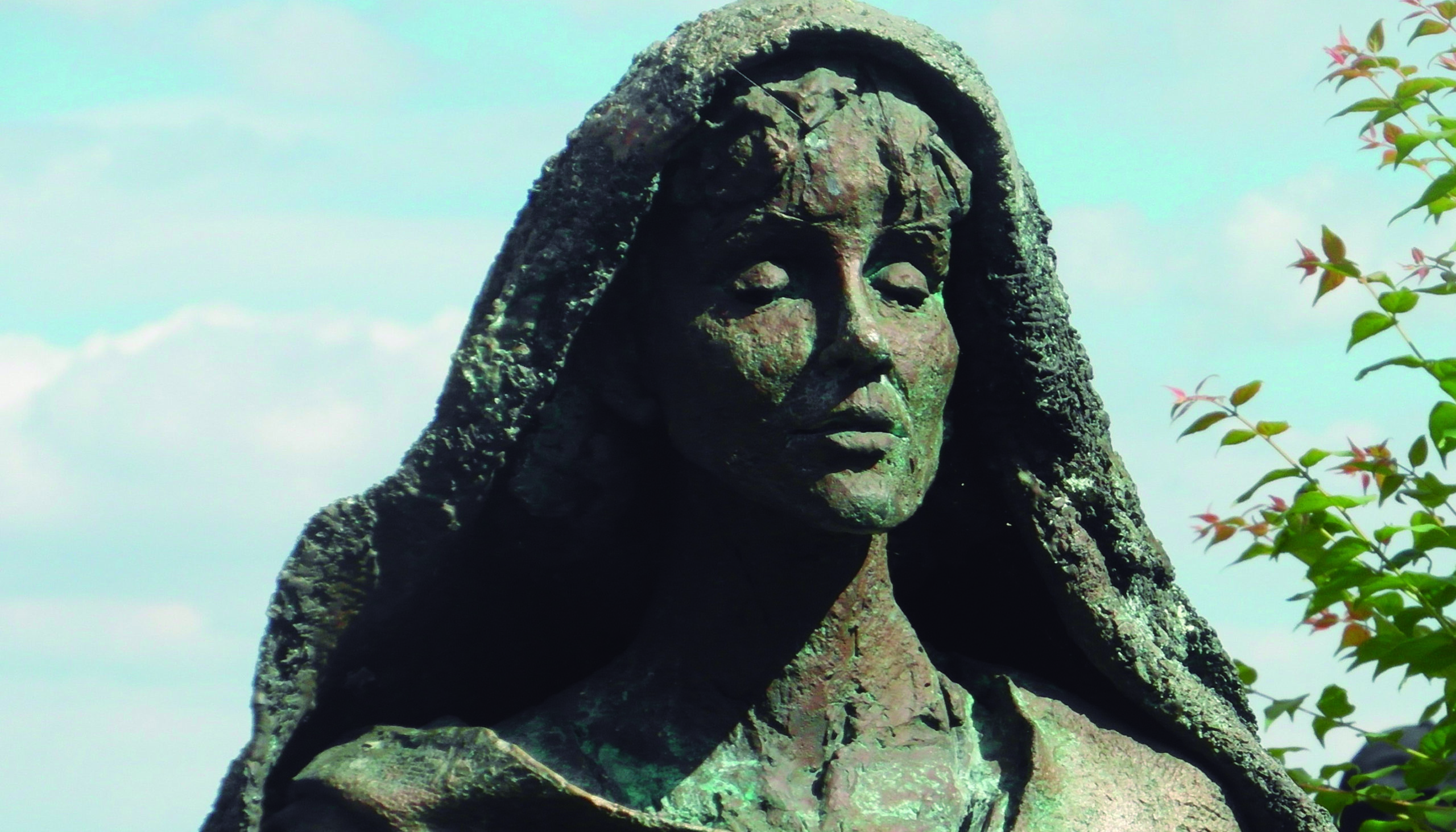
Who is this saint whom Benedict XVI elevated to Doctor of the Church?
Hildegard is part of the small number, four, of women doctors of the Church. Together with her, St. Catherine of Siena, St. Teresa of Avila and St. Therese of the Child Jesus make up the female presence among those proclaimed, so far, as doctors of the Church.
Although of reduced presence, as I pointed out Jaime López Peñalba in its article "Women Doctors of the Church. The mothers God has given us."published in the printed issue of our last november's magazine, "The history of the Church is incomprehensible without these female figures, the celebrated and the anonymous, who mark and sustain the life of families, communities, charisms and missions."
Life of Hildegard of Bingen
In the same issue, López-Peñalba recalls the figure of what he calls the "sibyl of the Rhine".
Hildegard was born in 1098 in the German Palatinate, the youngest daughter of a noble family, and as such was educated among the Benedictines of Disibodenberg. When the abbess of the female community died, Hildegard, her favorite disciple, was unanimously chosen to replace her, despite her youth of 38 years, which demonstrates her talents, already evident to all. Her personality gave impetus to the life of the monastery, and above all, to its freedom. Therefore, in 1148 the community founded the new monastery of St. Rupert in Bingen, seeking autonomy to deepen the reform promoted by Hildegard.
The fame of our nun spread throughout the European Church, spurred on by the decisive support of Bernard of Clairvaux and the reigning Pope Eugene III. By letter, in face-to-face interviews, in preaching trips, her word reached monks, nobles, the emperor, the legitimate Pope and the schismatic antipopes. In the middle of the late Middle Ages, this woman raised her voice calling for reform, conversion and holiness in Christendom... and she was heard!
Hildegard had had mystical experiences since she was a child. At the age of 41, the prophetic visions became stronger and were accompanied by an urge to put them in writing. Hildegard, submitting to the discernment of Bernard and Rome, wrote her main work: Scivias (Know the Ways), completed a decade later, in 1151. Here we find her personal mysticism, abounding in nuptial symbolism, as is frequent in feminine spirituals, with allegorical descriptions of her visions - enriched with the miniatures typical of medieval scriptoriums - that remind us in many ways of the prophecies of the Old Testament, and with a charismatic intelligence of Scripture and the history of salvation that demonstrates her spiritual stature. In 1163, he published the Book of the Merits of Life, a work of moral theology and discernment, centered on man as the image of God, where he shows a very fine anthropology and spiritual psychology. The last work is the Book of Divine Works, of 1173, a treatise on creation. She became ill, her poor health began to deteriorate, and she finally died in 1179.
It is said that Benedict XVI wanted to name her Doctor of the Church to rescue the spiritual figure of St. Hildegard from the oblivion of a cult that was too regional and from the abuse that some pseudo-religious movements such as the New Age were beginning to make of her works. Because Hildegard cultivated all the knowledge of the time: a Physics on natural sciences, the medical treatise Causes and Cures based on knowledge of biology and botany, a collection of liturgical chants called Harmonic Symphony of Heavenly Objects, which today musicologists study with interest. In this sense, Hildegard embodied perfectly the Benedictine ideal of seeking the eternal God who does not pass away (quaerere Deum), and in the process discovering man and the world, and learning a catholic wisdom that embraces everything, heaven and earth.
Benedict XVI and Hildegard of Bingen
The Pope emeritus dedicated two audiences to the figure of Hildegard of Bingen, on September 1 and 8, 2010. In them, he emphasized that this medieval saint "speaks to us with great timeliness, with his courageous ability to discern the signs of the times, with his love for creation, his medicine, his poetry, his music - which today is reconstructed -, his love for Christ and his Church, which was suffering even at that time, wounded even at that time by the sins of priests and laity, and much more beloved as the body of Christ".
Benedict XVI also emphasized that Hildegard, with her writings about her visions, is an example of how to "theology can receive a special contribution from women, because they are able to speak of God and the mysteries of faith with their particular intelligence and sensitivity".
His feast day, now included in the General Roman Calendar, is celebrated on September 17.