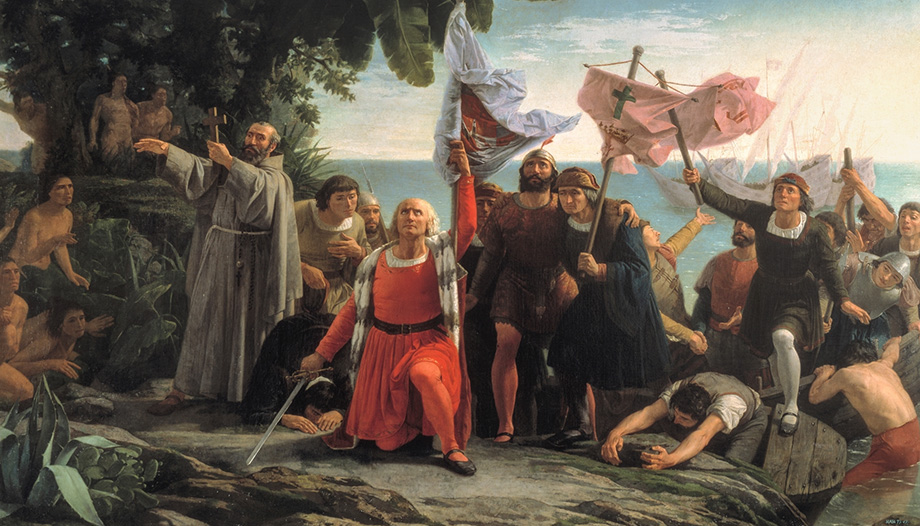
In 1492 Christopher Columbus arrived with three caravels to the American continent and produced one of the most important events in history: the encounter between native and European cultures.
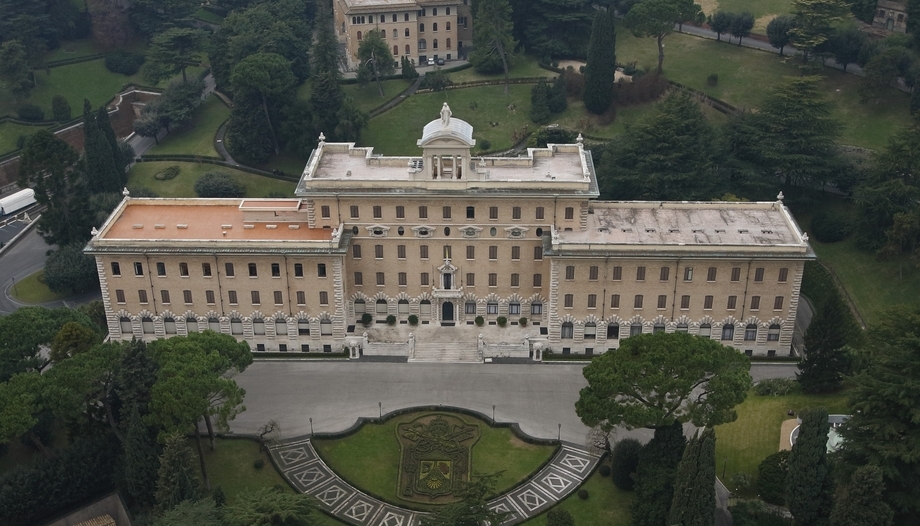
Two different visions of the world about which much has been said and written and which were the subject of discussion at a breakfast meeting with diplomats and journalists at a book presentation held on June 28, 2023 at the Vatican's San Calixto building, at the headquarters of the Social Promotion Foundation.

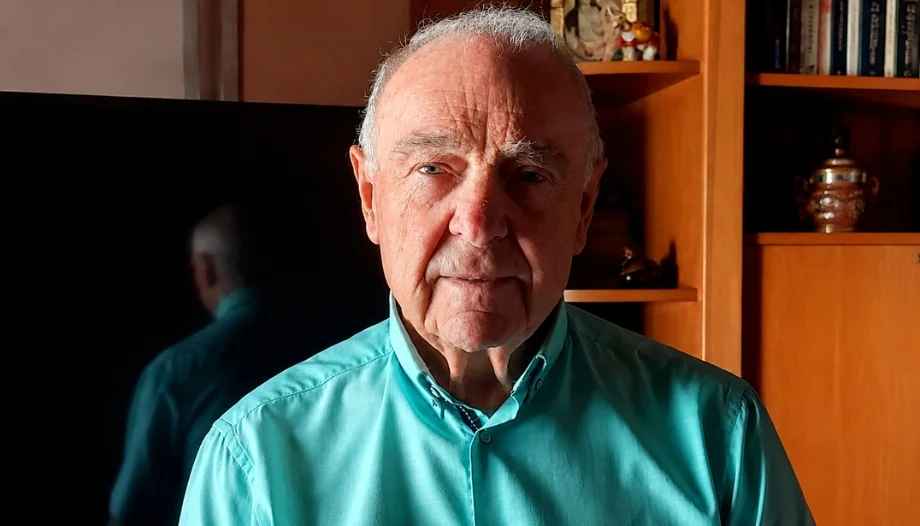
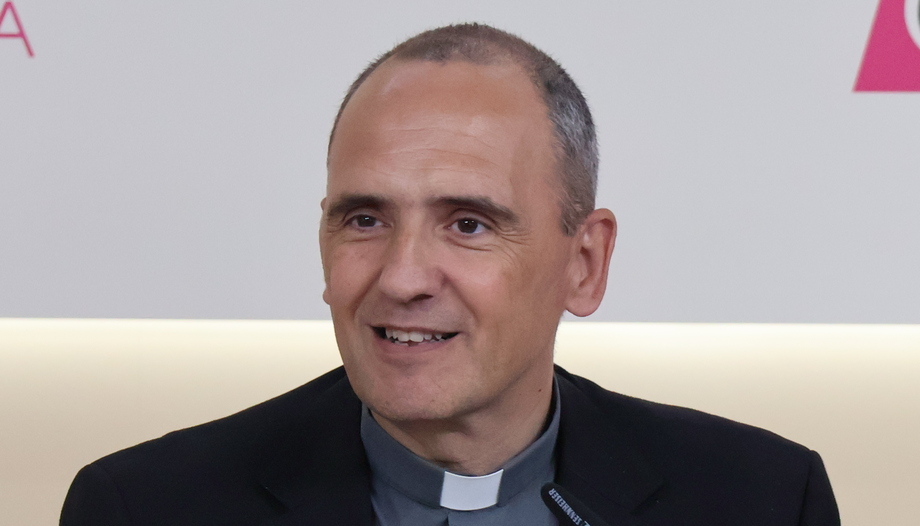
"En torno a América. Conquest and Evangelization" is the title of the book published this year, which offers a vision that "does not coincide with either the black legend or the golden legend" as explained by its author, the professor of the University of the Holy Cross in Rome, Msgr. Mariano Fazioat the event organized by Mediatrends America.
In the volume of just over 200 pages, the professor of history and philosophy cites a large number of documents, in which he narrates "a story full of virtues and lowliness, for such is the human condition," he added. He also delved into two aspects: "the armed conquest and its ends (gold, honor, faith) on the one hand and evangelization and the doctrinal and pastoral currents that triggered the evangelical proclamation, on the other".
When the subject is approached, the author assures, two extremes are usually idealized, ranging from the vision of Hernán Cortez's chaplain, López de Gomara, "for whom everything was perfect", to the chronicles of Bartolomé de las Casas, according to whom America before Columbus "was a paradise".
By claiming these absolute visions, we avoid seeing phenomena such as cannibalism and human sacrifices, but also the 'Requerimientos' that forced the Indians to listen to preaching, or the Inquisition with its headquarters in Lima, Cartagena and Mexico.
"It is not a good historical school of thought to be exclusivist, be it race, economics, religion or others, because there are different motives," said Bishop Fazio.
In explaining the historical period, the author recalled that "in the Renaissance everyone wants to put their names, unlike what happened in the Middle Ages", thus marking their actions with a strong desire for protagonism. In spite of this, the documents cited in the book indicate as something undeniable, that the "official policy of the crown of Castile was evangelization", although this did not prevent the search for gold and treasures in the new territories. Without forgetting an existing difficulty: "that we do not understand today: the union between the throne and the altar".
"There were obvious mistakes, but they did not want to impose the Spanish mentality, but rather they wanted to inculturateHe also recalled the work of the Franciscans, Augustinians, Mercedarians and later the Jesuits. He also recalled the work of the Franciscans, Augustinians, Mercedarians and later the Jesuits, who tried to learn the languages and understand the mentality of the natives, with many successful results, as in Paraguay, a bilingual country, where they wanted to preserve the Guarani language.
The historian stressed that there was no ethnocide, that is, the will to destroy cultures, and that it is a law of history -although some naive people want to ignore it- that all cultures change through time. That there is no such thing as pre-Columbian purism, and he illustrated this by mentioning a recent event: the World Cup final between his country, Argentina, and France, in which a large number of players "as French as De Gaulle" -he said- were of African origin.
Among the very positive points, he recalled a 16th century figure, Francisco de Victoria, in Salamanca and his considerations on the non-provenance of the pontifical 'donation' as a motivation to conquer America. He also cited the Treaty of Tordesillas, the first international bilateral treaty without the intervention of a Pontiff.
The author recalled the work of Fray Antón Montesinos, the first to publicly denounce the mistreatment of the indigenous population, who initiated lasting action to prevent it, and who influenced Fray Bartolomé de las Casas.
The working breakfast concluded with questions and answers on the subject of the capitulations, the contract that each conquistador signed with the Crown, the royal fifth, the civil wars between Pizaro and Almagro, the existing cultures that were negatively affected by the arrival of the Europeans, up to the establishment of the viceroyalties. One of the ambassadors also asked what would have happened if the Spaniards had not arrived.