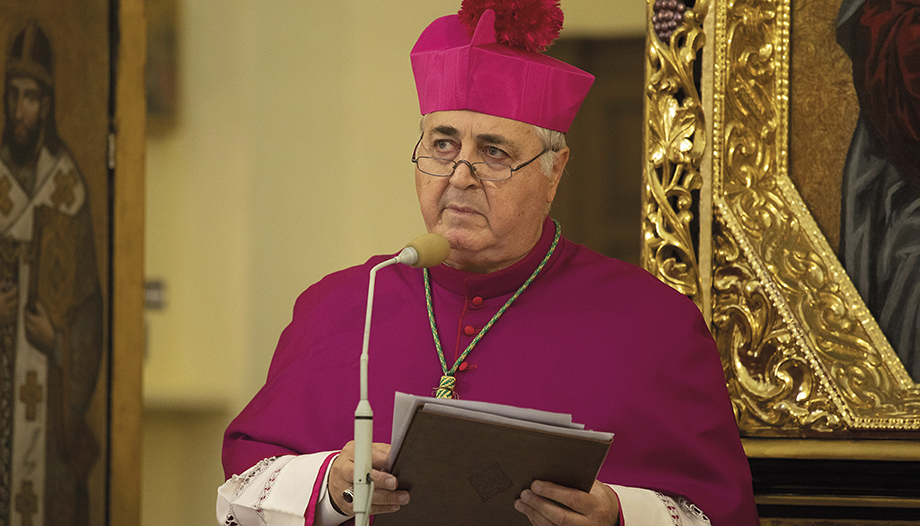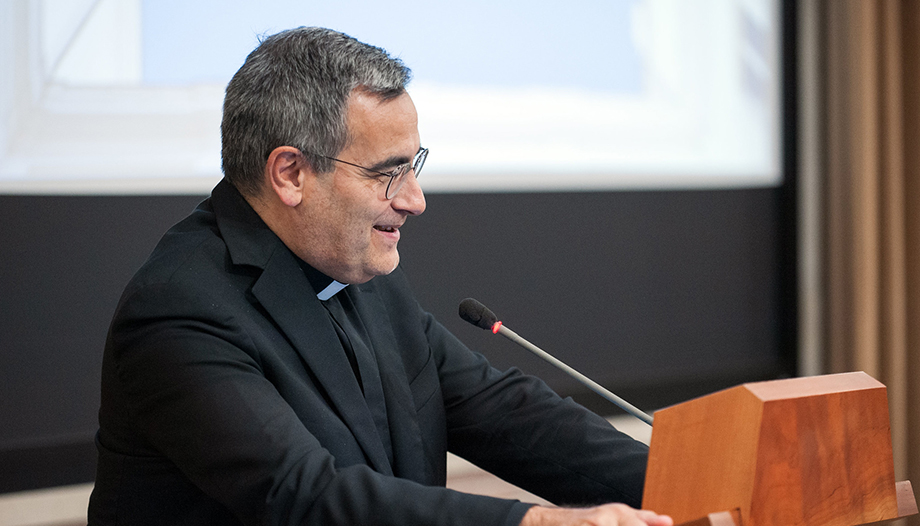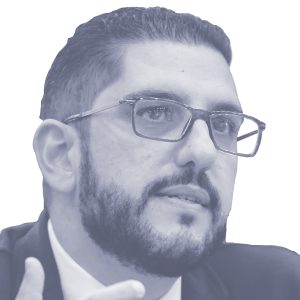
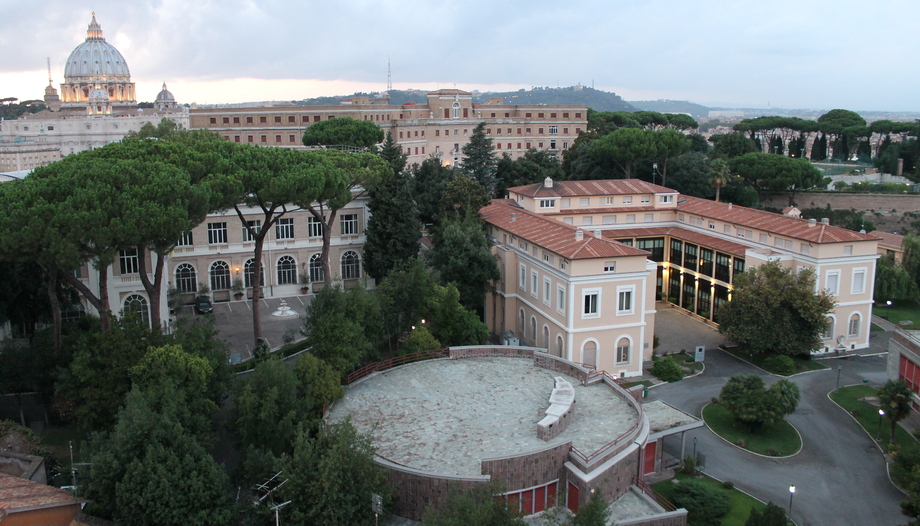
On Tuesday, October 15, Cardinal Giorgio Marengo inaugurated the 397th academic year of the University of Rome. Pontifical Urbaniana University with a reflection in which he defined mission as a "mystery" that arouses a deep love for the Risen One and for those to whom he is sent. In his talk, entitled "Missionary Church and the missionary nature of the Church: a view from the perspective of the Church. Asia" -, the current Apostolic Prefect of Ulaanbaatar in Mongolia shared with those present some crucial elements of the nature of the mission, without forgetting the importance of formation, which remains indispensable for the apostolate ad gentes to be truly fruitful.
"The object of research, teaching and study is not the opinion of this or that thinker," began Cardinal Marengo, a former student of the Urbaniana, "but 'everything that refers to Him, the Lord and Savior, who by revealing the face of the Father changed the destiny of humanity, unleashing the dynamism of the mission.'"
The opening ceremony was introduced by Cardinal Luis Antonio Gokim Tagle, Grand Chancellor of the Urbaniana and Pro-Prefect of the Dicastery for Evangelization, while the concluding remarks were entrusted to Professor Vincenzo Buonomo, Pontifical Delegate with the office of Rector Magnificus.
Mission "ad gentes": a contemporary challenge
In his address, Cardinal Marengo explored the concept of mission "ad gentes," evidently drawing on his personal experience as a missionary in Mongolia, a country that Pope Francis will visit in August 2023. He thus explained how this form of apostolate, aimed at contexts where the Gospel is little known or where the Church is not yet fully constituted, remains crucial even today: "the world needs to receive this good news and has a right to it."
In such scenarios - let us consider that in Mongolia the Church has only been present for 32 years with a community of about 1,500 local believers - to be truly effective one must consider that every aspect of ecclesial life can have a significant impact on the populations to which one is sent, but this requires solid doctrinal preparation and a witness that is truly of quality.
The importance of the formation of missionaries
"Can the mission be 'learned'? Yes, just as the disciples of Emmaus had to listen to the Risen One, who 'explained to them in all the Scriptures what referred to him,'" reflected Marengo, stressing the fundamental role of study in the preparation of future missionaries.
Recalling the thought of Blessed Giuseppe Allamano, he recalled how for a missionary not only holiness of life is necessary, but also a solid scientific and cultural preparation: "piety can form a good hermit, but only science united to piety can form a good missionary".
This formation must have a "holistic" character: philosophy is certainly necessary, "but also the social sciences, linguistics, canon law; above all, theology".
After all, we study "not only because 'it is our turn', as our superiors have commanded us, not even to feed vain professional ambitions," added the Apostolic Prefect of Ulaanbaatar, but above all "we study out of love for Christ, for the Church and for the people to whom we are sent as missionaries," taking seriously "the encounter between the Gospel and Culture."
In this regard, Marengo cited the ongoing work for the complete translation of the Bible into Mongolian as an example of a challenge that certainly requires linguistic knowledge, but inevitably a deep understanding of the local culture. Staying in the context in which he works as Prefect, fulfilling the mission "ad gentes" therefore means immersing himself in the rich nomadic tradition, understanding Tibetan Buddhism and shamanism, and finding ways to present the Gospel that respect and enrich these traditions without supplanting them.
Well aware that these "mediations" are always carried out through "concrete persons" capable of giving "flesh to the words of Jesus and inviting to the banquet of the Kingdom".
Reform and renovation
The Pontifical Urbaniana University is currently undergoing a process of reform The Institute has been working to strengthen its missionary identity in order to adapt it to the new global challenges. This is translating into changes in its academic organization and pedagogical approach, always with the idea of increasing its commitment to the formation of religious and lay people capable of responding to the needs of a society in constant evolution.