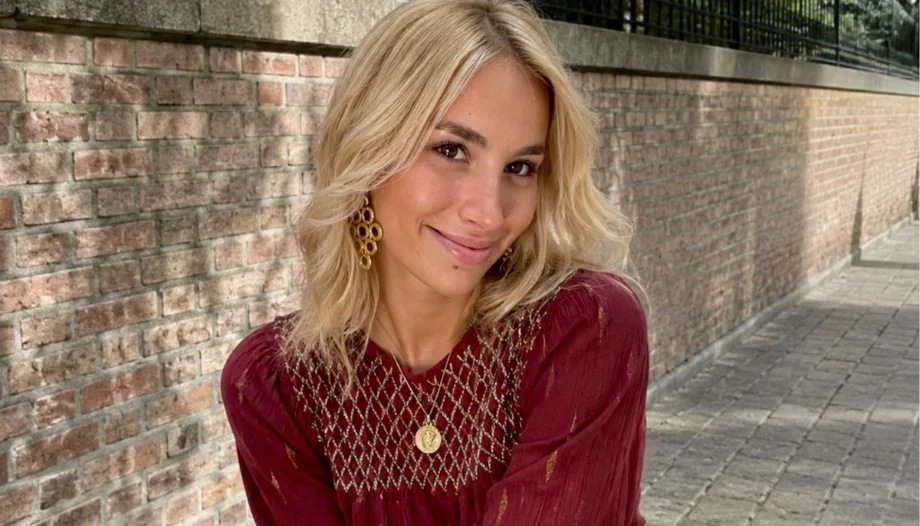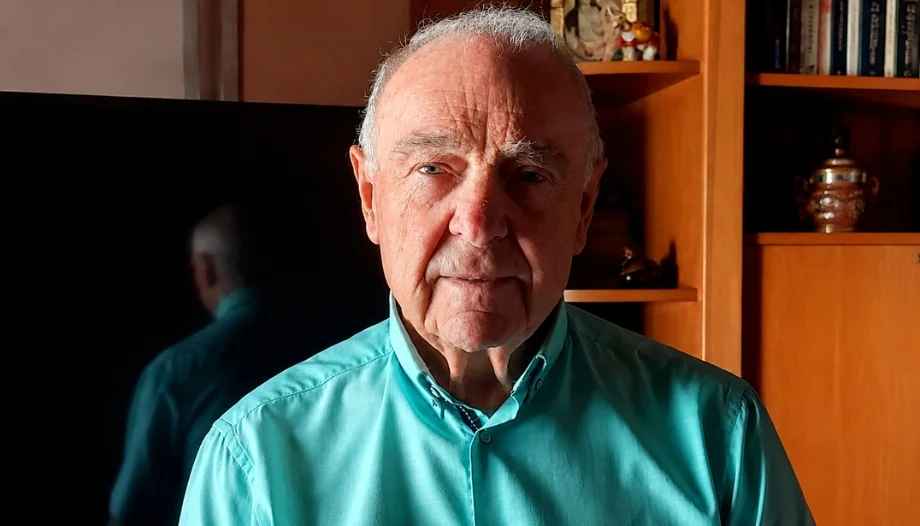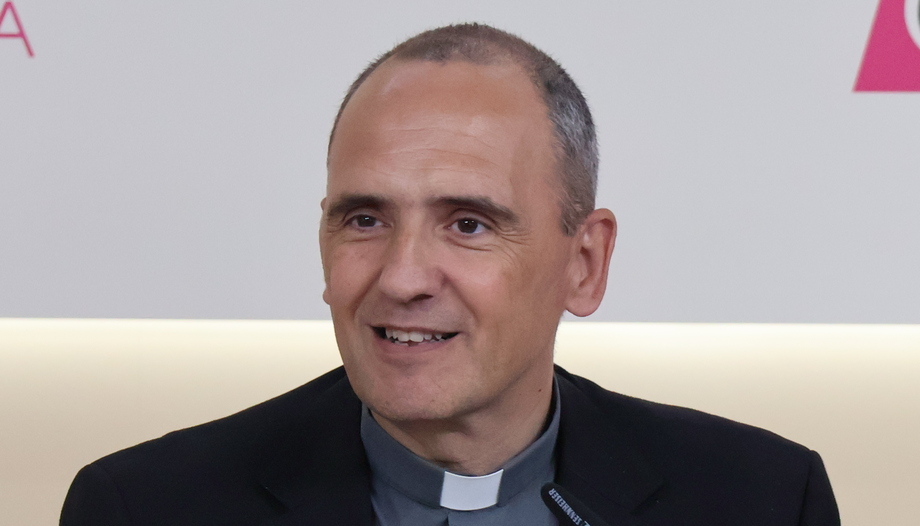
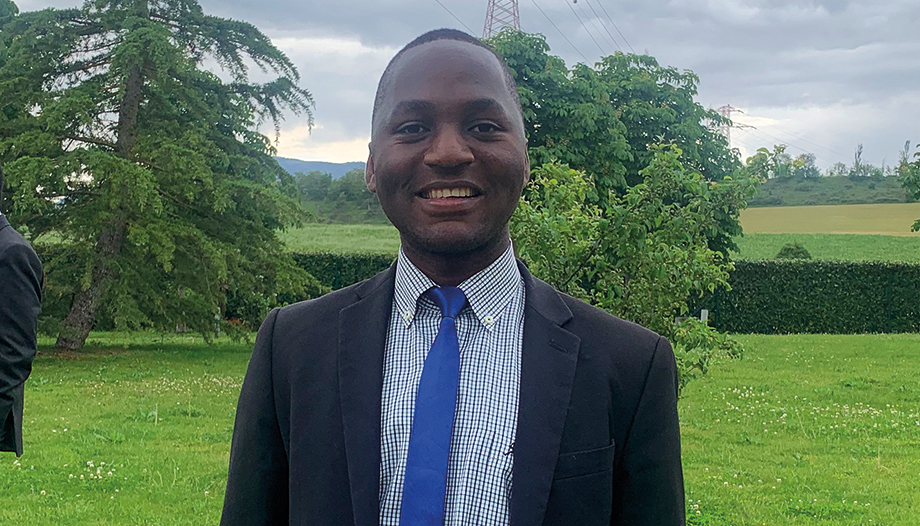
David Harvey Chipeta comes from the Diocese of KarongaThe most recent of the 8 dioceses into which the Catholic Church in Malawi, Africa, is divided. He is currently completing his priestly formation at the University of Navarra.
How was your vocation to the priesthood born?
-When we were little, my father encouraged me to attend Sunday school at church. I come from a rural place where a priest came once a month and, out of curiosity, I always preferred to go to mass with the elders. One day I was moved by the way the priest could recite the doxology, without looking at the missal. I thought he had memorized it all. My father used to tell me that priests are very intelligent and have the ability to memorize the entire missal. I have always wanted to be an intellectual so I thought: "then I want to be one of them."
In my family we had a tradition: after dinner we would meet with my father and he would ask each of us what we wanted to be when we finished school. Each brother would say what he wanted to be when he grew up and I would always answer "priest". All my brothers would laugh, but my father would then tell me that if I wanted to be a priest I had to be a hard worker in class and have a great memory capacity. A few years later I had the opportunity to study in the minor seminary and I did very well. That was the beginning of my journey.
After the propaedeutic formation, I was asked to study philosophy in Tanzania at St. Augustine's Major Seminary in Peramiho Songea. As soon as I finished my three years of philosophy, I was asked if I would like to study theology in Spain. It was all God's plan, as I never dreamed of being in Europe at any time in my life.
What are the characteristics of the Catholic Church in Malawi and its main challenges?
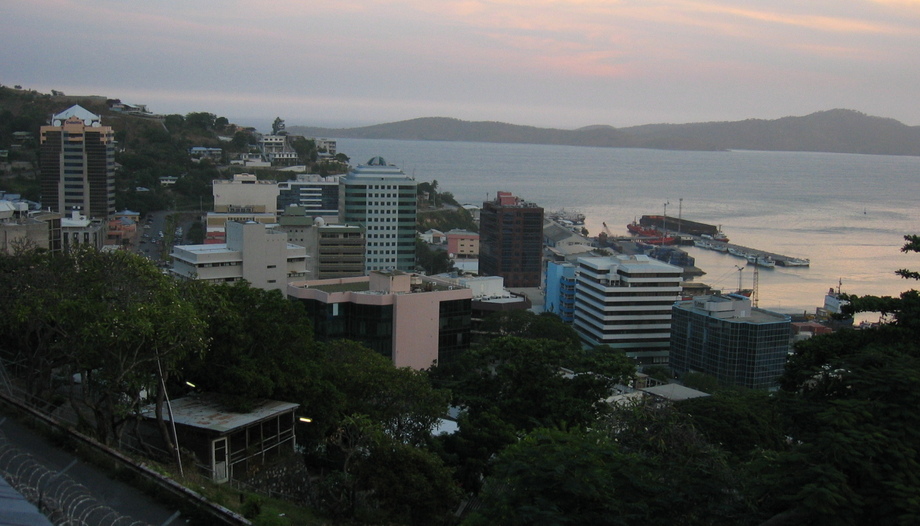
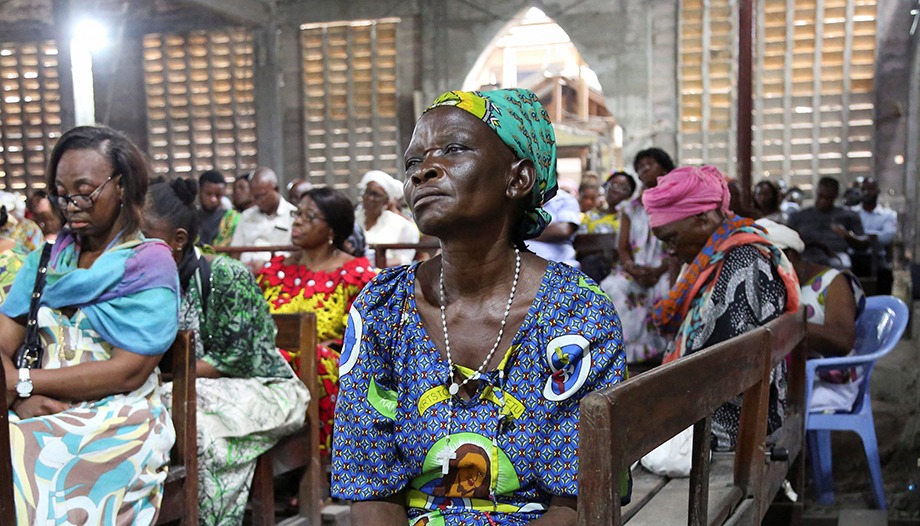
-Malawi is a landlocked country located in southeastern Africa. The Catholic Church in Malawi is more than 120 years old, since the first missionaries, who were the Missionaries of Africa, arrived in 1889. The most recent diocese in Malawi, the Diocese of Karonga, where I come from, is in the northern region. Currently, the country has about 77.3 % of the population is Christian and 13.8 % is Muslim.
The local Church in Malawi has several challenges, some of its main problems arise from the mixture of culture and faith, especially because witchcraft and religion are sometimes confused. We all know that there is only one God, but the problem arises when one wants to worship him while believing in the powers of dead ancestors. Another problem that arises from this practice is that elders are harassed and accused of killing others using supernatural power.
In addition, the Church is also facing economic problems, as it has not yet reached the point of being self-sufficient.
What is the relationship of the Church with other Christian dominations?
-There is a cordial relationship between the Catholic Church in Malawi and other Christian denominations. The Catholic Church collaborates with other Christian churches in many areas. For example, in education, in the field of health or through the Public Affairs Committee, which brings together the main religious communities in Malawi. This organization continues to play a key role in the areas of human rights, mediation, advocacy, HIV/AIDS, gender-based violence, religious coexistence, electoral processes and peace and security.
What do you highlight from the training you are receiving?
-When I was asked to come and study, we really didn't know where the funds would come from. The bishop told me: "We don't have anything to pay for your studies, let's see what I can do.".
The bishop learned of the CARF Foundation and I was granted the opportunity to have a scholarship at the University of Navarra. Here they have very high quality classes, a well-structured curriculum: everything one needs to be a good theologian and a good priest. I cannot finish without talking about the Bidasoa Seminary. I am grateful every day for the good formators and for the favorable and adequate environment for the correct formation of a seminarian that Bidasoa offers.