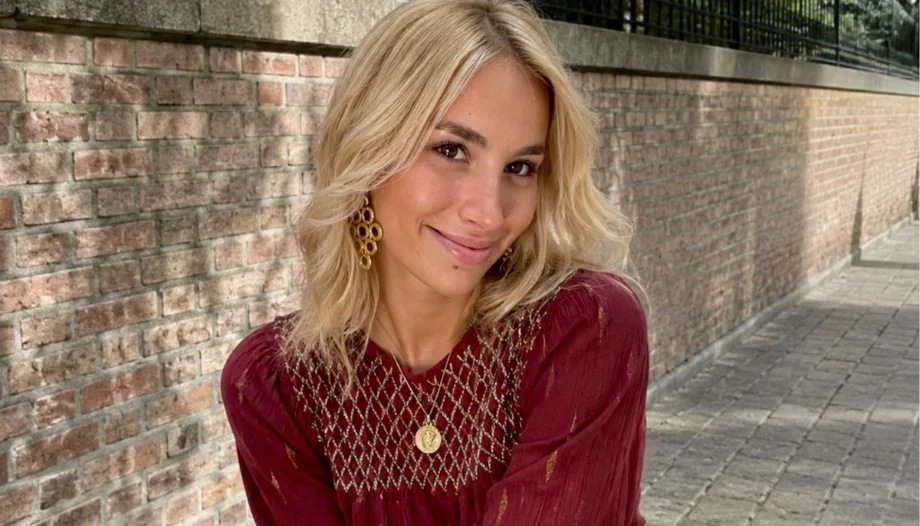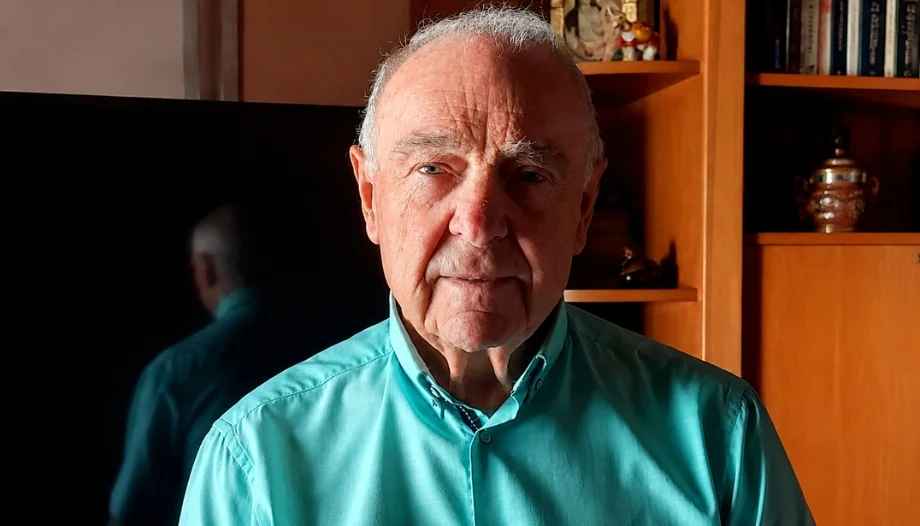
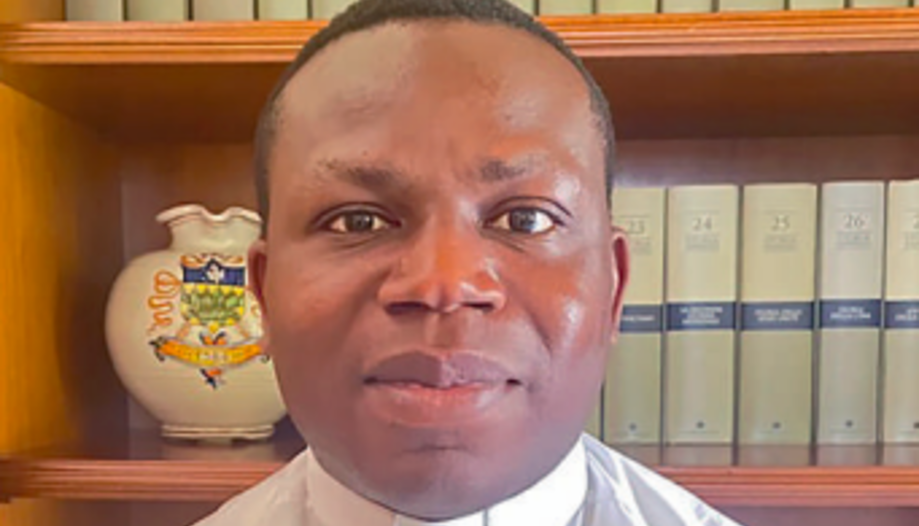
Jean Ramazani Mukwanga was born in Sama (Democratic Republic of Congo) on October 2, 1992. He comes from a family of nine children and was ordained to the priesthood on June 5, 2022. He is studying Canon Law at the Pontifical University of the Holy Cross and is currently in his third year of studies. He is currently at the Tiberino Priestly College.
How did you discover your vocation to the priesthood?
-I discovered my vocation just after my baptism, at the age of 12, that is, in 2005. I was baptized as an adult, because my parents had not yet contracted a religious marriage. At that time, in the Kindu diocese, a child could not be baptized if his parents were not religiously married. Right after the baptism, I joined the altar boys' group and, after a month, I started serving at the altar during Mass. As I sat next to the priests and served at Mass, I felt a great desire to be a priest. That was the major turning point in my vocation story, and after a year I enrolled in the vocation group, so in 2006 and 2007 I entered the minor seminary.
What was the reaction of your family and friends when you told them you wanted to become a priest?
-At first, my parents did not want to hear me say that I was going to be a priest. Faced with their attitude, I got angry and did not want to eat or talk to them for three days. When they saw my reaction, they accepted my going to the minor seminary. As for my friends, some were happy, others did not want me to become a priest.
How would you describe the Church in your country?
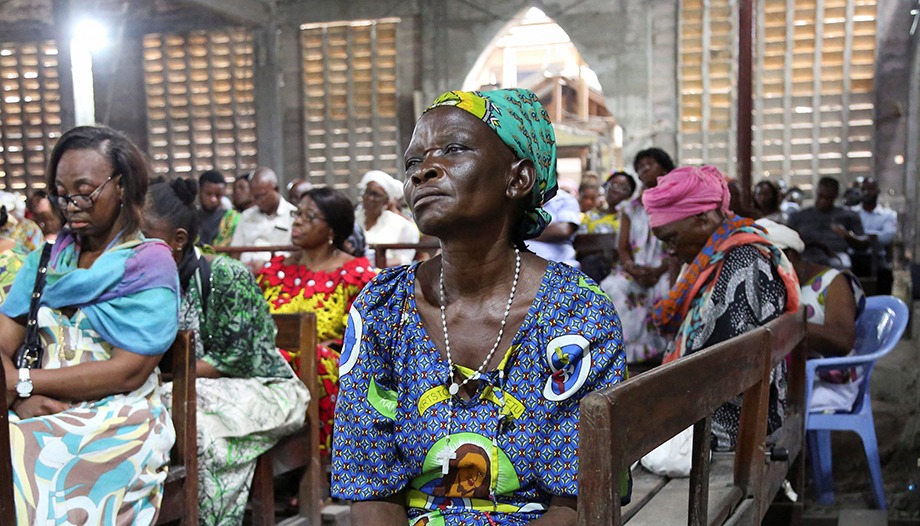
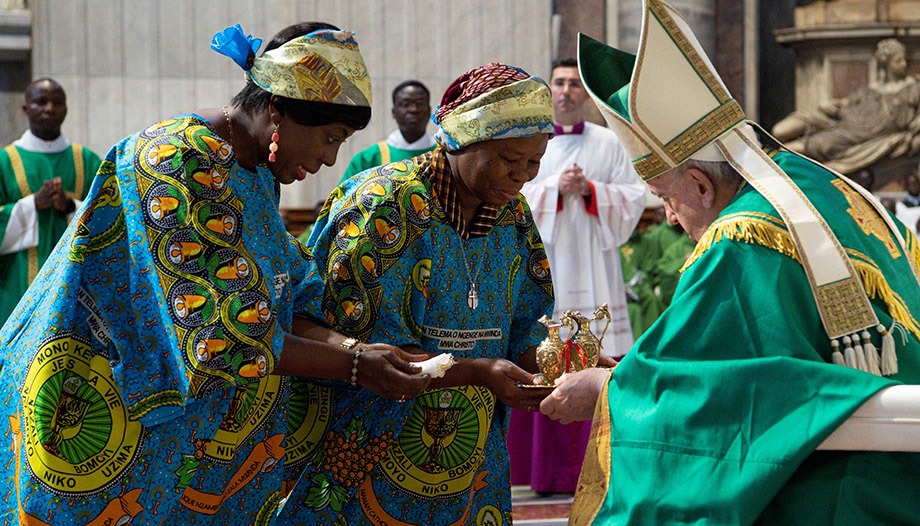
-The Democratic Republic of Congo is one of the African countries with the largest Christian population. About 80-90 % of the population claims to be Christian, divided mainly between Roman Catholics (~50 %), Protestants (Église du Christ au Congo - ECC) (~20 %), renewal churches (Pentecostal, Evangelical, etc.) (~10-15 %), and other Christian groups (such as Jehovah's Witnesses, Orthodox, etc.).
What are the challenges facing the Church in your country?
-There are several. Lack of resources, since there are few financial means to support parishes, schools and social works; insecurity and conflicts, since in some regions (especially in the east), violence makes pastoral work difficult. Also widespread poverty, the Church often has to make up for the shortcomings of the State (education, health, etc.). On the other hand, the shortage of priests and religious, especially in rural areas, where some communities do not have regular spiritual accompaniment. There is also corruption and political pressures, since in denouncing injustices, the Church sometimes suffers threats. Finally, there are the challenges in formation, there is a great need to strengthen the formation of the laity, catechists and future priests.
How do you see the future of the Church in your country?
-The future of the Church in the Democratic Republic of Congo is full of hope, despite the many challenges. Its future depends on committed Christian youth, growing vocations, closeness to the poor, solid formation and prophetic courage in the face of injustice.
What do you appreciate most about your training in Rome?
-What I appreciate most about my formation in Rome is the care with which the Pontifical University of the Holy Cross teaches me, not only intellectually, but also spiritually and humanly.
How does your vocation as a priest help you in your pastoral work? How does your formation through the CARF Foundation help you in your pastoral work?
-My vocation as a priest today is a call to serve God's people with humility, joy and hope. Thanks to the CARF FoundationI have received a solid intellectual, spiritual and human formation in a universal ecclesial environment. And this can help me to better serve the Church in my country, with competence, love and fidelity. I am grateful for this opportunity, which makes me a more prepared worker in the harvest of the Lord.