According to the Catechism in its number 1822, "Charity is the theological virtue by which we love God above all things for His own sake and our neighbor as ourselves for the love of God".
In other words, charity and love are intertwined, one leads me to the other and vice versa; and in a radical way, because there are no half measures: either I am charitable or I am not, or I love or I do not love.
The phrase "love and do as you please", attributed to St. Augustineimplies that, if you act moved by love - true love, of course - any action you do will be right and good. It is interpreted as a synthesis of Christian doctrine, where love of God and neighbor is the foundation of every moral act. This is why we can affirm that charity is the "queen" of the virtues. And, as St. Augustine continues to indicate, the culmination of all our works is love.
Since it is a theological virtue -referring to God and coming from God- it is something proper to Christians, which of course does not mean that those who do not belong to this creed cannot love.
The only thing that happens is that the divine grace involved in the manifestation of love alone acts in the Christian's soul, and, so to speak, brings him closer to that God thanks to whom and through whom he loves others: it makes him a saint.
The love manifested by the Christian is charity, in the sense that the human act of loving is elevated to the supernatural realm and opens him to the action of divine grace in his soul.
Practical manifestations of charity
It will be the saying "deeds are loves, and not good reasons" that will make charity, understood as love of God and neighbor, manifest itself in practical life through concrete actions that seek the good of others.
What would that include? Among many other possibilities, we would refer to helping those in need, respectful dialogue, the guardianship of truth and the pursuit of justice.
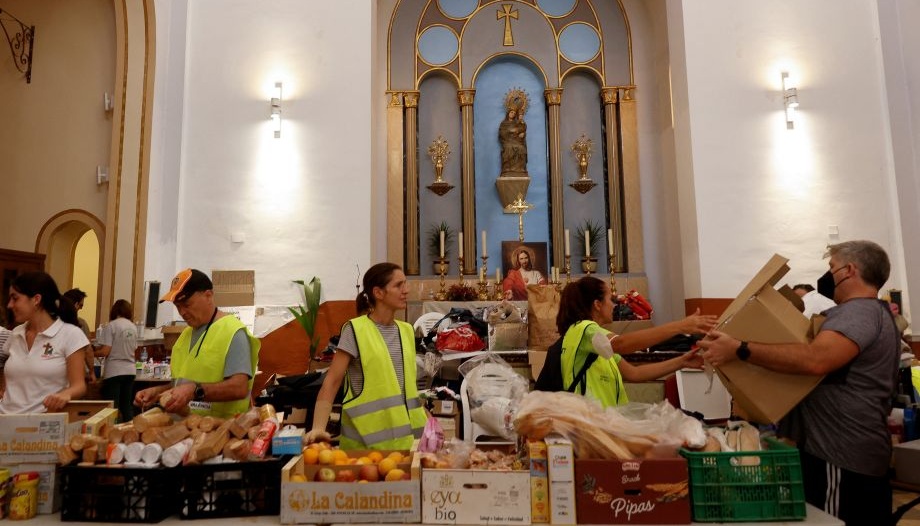
- Helping those in need: it is about showing solidarity with the suffering of others, based on empathy; this could take the form of giving alms, donating food or clothing, providing support to the homeless, or volunteering for charitable organizations.
- Respectful dialogue: constructive communication that avoids mistreatment, destructive criticism and the search for conflict. Only through sincere dialogue can we understand each other's perspectives and seek joint solutions.
- Custody of the truth: Charity involves guarding the truth at whatever cost, even when doing so is difficult or uncomfortable. This can manifest itself in the defense of human rights, or the denunciation of corruption in so many areas.
- Pursuit of justice: Charity is not only limited to individual assistance, but also involves working for social justice and equal opportunities for all. This may involve supporting policies that ensure the rights of the oppressed and benefit the most vulnerable.
- Reconciliation: charity involves forgiving offenses received and seeking reconciliation with others. Forgiveness is not only an act of mercy, but also an act of love that frees people from bitterness and resentment.
- Rendering the gifts or talents received: Charity encourages each person to use his or her talents and gifts to serve others and contribute to the common good. This can manifest itself, for example, in teaching, helping the sick and finding solutions to other people's problems.
The fruits of charity
After all the above, we could point out that charity in practical life translates into concrete actions of love, compassion and service to others. It is a virtue that impels us to seek the good of others and to work for a more just and supportive society.
But something that should be emphasized is the benefit obtained by being charitable. God does not allow himself to be won over by generosity. And, according to point 1829 of the Catechism, "Charity has as its fruits joy, peace and mercy (...); it is benevolence; it is reciprocity; it is always disinterested and generous; it is friendship and communion" (...). Which, of course, is a reward for those who give themselves for the good of others, in correspondence to our nature, whose design involves surrender, donation.