Pope Francis has recently updated the Norms on the most serious crimes reserved to the Congregation for the Doctrine of the Faith. These norms are commonly known as those regulating crimes of sexual abuse committed by clerics, but they are not exhausted in them. It should be noted that these norms were promulgated by John Paul II in 2001, subsequently updated by Benedict XVI, and now by Pope Francis.
In addition to the crimes mentioned above, these norms contemplate crimes against the faith, such as heresy, apostasy or schism. It also regulates crimes against the sacrament of the Eucharist, such as the profanation of the Eucharistic species; crimes against the sacrament of Confession, for example, the absolution of the accomplice in the sin against the Sixth Commandment or the recording of Confession.
Why the need for a new update? In reality, Pope Francis has not introduced any new offenses, since from a comparative reading of the previous and current norms, we realize that the offenses remain the same.
The changes focus on procedural matters, so that they are in line with the latest changes that the Roman Pontiff has made in criminal matters.
The new rules also clarify some somewhat ambiguous points, with a view to improving the application of justice and guaranteeing the right of defense.
Harmonization with the Code reform
A first necessary change is the updating of the norms on serious crimes so that they would be in harmony with the modification of Book VI of the Code of Canon Law made by the Pope through the Apostolic Constitution Pascite Gregem Dei. Along the same lines, some changes introduced by the Rescripta ex Audientia Ss.mi of December 3 and 6 have been incorporated. These are norms with the status of law that had already modified the norms issued by John Paul II and Benedict XVI.
Distinction between processes
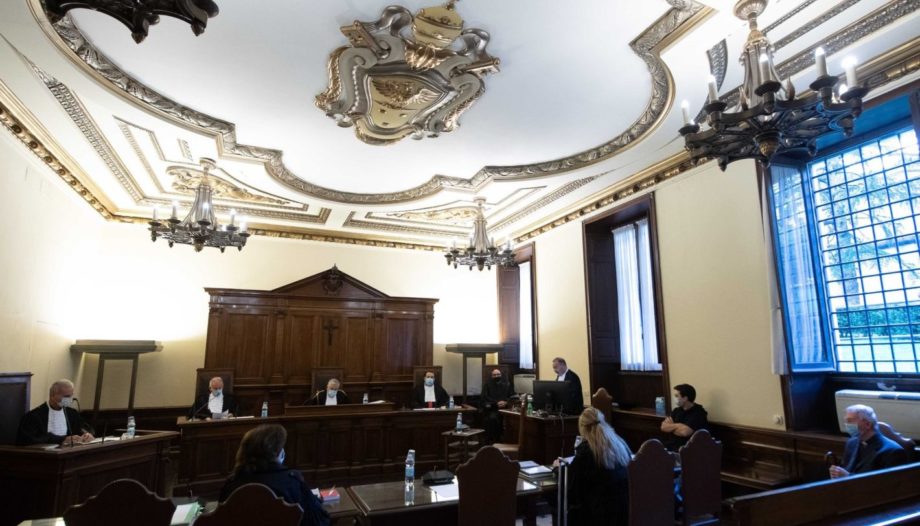
A second change, of some relevance, is the clearer distinction between judicial and extrajudicial proceedings. This is evident in that each has its own title regulating when one or the other type of process may be used, although in reality, the latter is not a process in the strict sense, but rather an administrative procedure.
On this occasion, it seems that the new regulations propose both processes as two alternative ways to be used, leaving behind the idea that the judicial process was the rule, while the extrajudicial or administrative process was the exception.
Right of defense
A third change corresponds to the defendant's right of defense. On the one hand, the time limit for appealing against the first instance sentence has been extended, both in the judicial and extrajudicial proceedings.
On the other hand, it is required that the accused (the rule uses the word "defendant", which we do not consider to be the most appropriate in the case of an ongoing process) must be represented by an attorney, which provides a greater guarantee of the right of defense.
Finally, provision is made for the possibility of referring to the Pope's decision at any stage of the process the possibility of expelling the accused from the clerical state, as well as the dispensation from celibacy or religious vows, when the commission of the crime is manifestly established, provided that the accused has been given the possibility of defending himself.
In these cases it is not easy to take stock of the norms. It takes time and hope that the operators of justice, be it the Congregation for the Doctrine of the Faith or the diocesan tribunals, apply these norms properly, with a correct sense of justice, taking into account those principles that govern the protection of rights, that is, that the persons who may have been violated are protected, as well as the procedural guarantees that all the faithful in the Church have, beginning with the possibility of defending themselves in trial.