

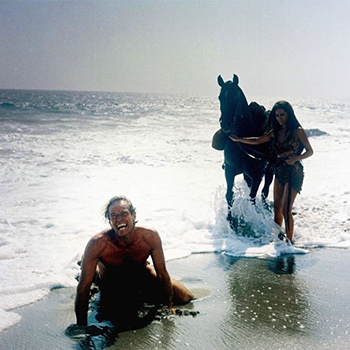
That movie, which later spawned a TV series and is now a major franchise, had a profound impact on my childhood. Planet of the Apes narrated a dystopia in which the human species had succumbed to the superiority of the apes that dominated the earth in an imaginary future. At the origin, the great failure of man since Adam and Eve: wanting to be like God, this time through the misuse of genetic engineering and nuclear energy, to end up realizing that he is naked.
The human being, made in the image and likeness of God, has the power to give life and to take it away, to reproduce or to become extinct. He is the only living being who can break the law of self-preservation, which is inscribed in all creation, in order to follow the law of self-destruction. Created for life, in our freedom we are capable of condemning ourselves to death. This is in fact what, in theological terms, we call sin, although the word in popular language has other connotations that are often erroneous.
The dystopian world we are living in this 2020-2021, with mutant viruses threatening the human family, has made us think about the fragility of our species and about the real possibility that Hollywood fables may end up becoming something more than entertainment.
Let this introduction serve as an argument to explain why the other night I had trouble falling asleep after reading this data: in Spain there are 6.2 million children under 14 years of age while there are more than 7 million registered dogs. The illusion of young couples is no longer to have offspring, but to share a dog. The human being is born, grows up, adopts a dog and dies without a trace. This is the reality of 21st century men and women, condemned to a dog's life where the love of a family, open to eternity, is replaced by the uncompromising affection of adorable animals.
And we must not forget that the dog is a species created by humans, crossed for generations to satisfy our needs and, today, the most basic need (look at the much-vaunted welfare society) is affection.
On this World Day of Prayer for the Care of Creation, I am reminded of the words of the Pope in Laudato si'The human being cannot have a real feeling of intimate union with the other beings of nature if at the same time there is no tenderness, compassion and concern for human beings in the heart. It is evident the incoherence of those who fight against the trafficking of animals at risk of extinction, but remain completely indifferent to the trafficking of human beings, or are indifferent to the poor, or are bent on destroying another human being they dislike".
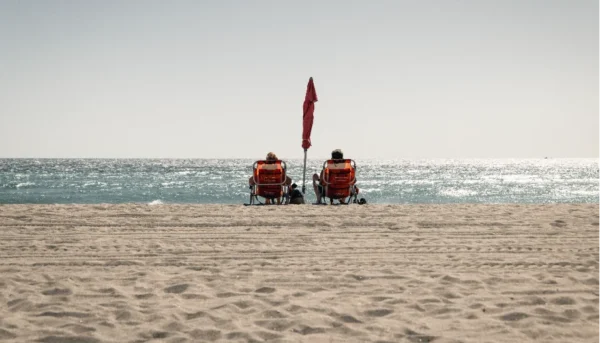
And before the inequalities of our world, before the superiority of the throwaway culture, which despises the poor, the elderly, the sick and the children, while supposedly loving animals more and more; that final scene of the film with which I opened the article comes to mind: A masterful Charlton Heston discovers at last that, after the destruction of the human race, there is no other guilty party than man himself in the use of his freedom. And on all fours, lying like a dog on the shore of the beach while being shaken by the waves, he exclaims: "Maniacs! You have destroyed it! I curse you!".